


Own Ticket Shop vs. Third-Party Platforms: Why Event Websites Need to Sell

A modern event website should do more than look good. It should sell tickets, handle bookings, support QR check-in, and turn search traffic into revenue. Event Website · Online Booking · Ticket Shop An event website should not just explain what is happening. It should help people de...
Olymaris Team
Published on April 30, 2026 · Updated May 24, 2026
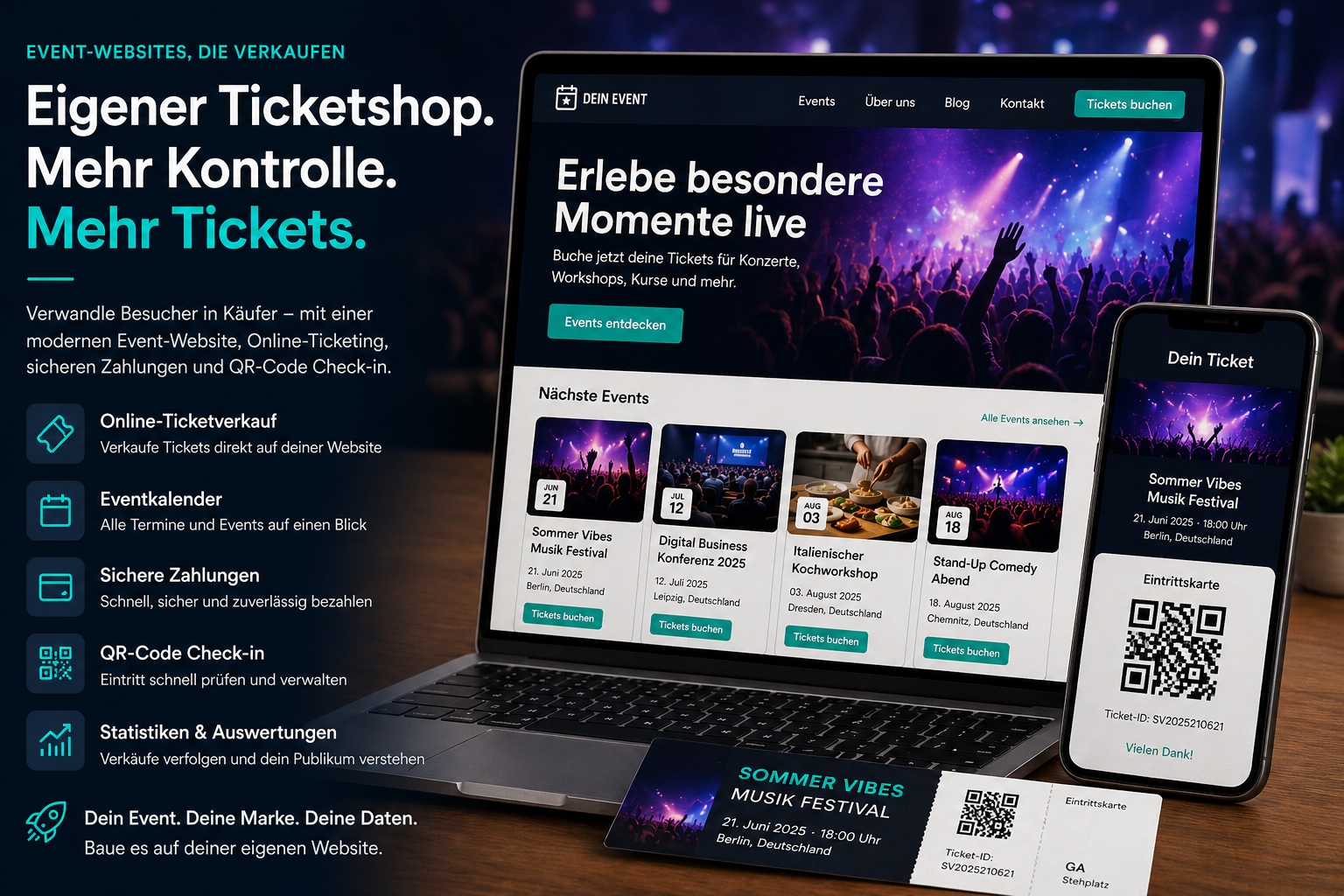
Event Website · Online Booking · Ticket Shop
An event website should not just explain what is happening. It should help people decide, book, pay, and show up.
Searches around Deutschlandticket, DFB Tickets, Schalke Tickets, Hamburg Marathon 2026, Giovanni Zarrella Show, concerts, workshops, and local events all point to the same behavior: people search when they are close to action. They want a date, a seat, a price, a booking button, and a reason to trust the organizer.
Ticket searches are not casual traffic. They are buying signals.
When someone searches for event tickets, workshop booking, cooking classes, marathon registration, team events, or local experiences, they are usually past the awareness stage. They are not just browsing. They are comparing options, checking availability, and looking for the easiest way to take the next step.
That is where many event websites fail. They look nice, but they do not sell. The visitor has to send an email, wait for a reply, ask about availability, or leave the website to complete the booking somewhere else. Every extra step creates friction. Every friction point can cost a sale.
The real problem with third-party ticket platforms
Third-party platforms can be useful in the beginning. They are fast, familiar, and easy to set up. But the moment an organizer wants to grow, the trade-off becomes obvious. The platform owns part of the customer experience. The brand becomes secondary. The booking flow looks like everyone else’s. Customer data is harder to use. And the relationship between organizer and buyer becomes weaker.
An own ticket shop gives event organizers more control. They can shape the full journey from Google search to event page, from event page to checkout, and from checkout to check-in. That control matters because the buying decision is often emotional, fast, and mobile.
What a modern event website should include
Dedicated event pages
Every event needs its own page with date, location, pricing, availability, details, and a clear call to action.
Online payment
Buyers should be able to pay right away. A delayed payment process often means a lost booking.
QR code check-in
A QR check-in flow makes entry faster, reduces confusion, and gives the organizer better control on event day.
Event calendar
Visitors should be able to compare upcoming dates, open spots, and formats without digging through the website.
Admin dashboard
Organizers need a simple way to manage events, bookings, tickets, inquiries, pricing, and participants.
Search-ready structure
Event pages should be built so Google can understand the topic, location, intent, and booking relevance.
Case study: KochKunstWerkerei
A strong example is KochKunstWerkerei , a regional experience brand for cooking classes, team events, outdoor cooking, and culinary workshops in Mittelsachsen.
The website does more than present the brand. It gives visitors a clear path toward discovery, event selection, booking, and inquiry. That is the difference between a brochure-style website and a revenue-focused event website.
As an Olymaris project, the setup connects event presentation, ticket logic, booking flow, inquiry forms, and a technical foundation that can grow with the business. You can view the related KochKunstWerkerei case study on the Olymaris website.
From Google search to booking
Event buyers move fast. If the page loads slowly, the offer is unclear, the date is hard to find, or the booking button is buried, they leave. A high-performing event website has to make the next step obvious.
The page should answer the buyer’s main questions immediately: What is the event? Who is it for? When does it happen? What does it cost? Are spots available? How do I book? The faster those answers appear, the easier the purchase becomes.
Why UX directly affects ticket sales
UI and UX are not decoration in a ticket shop. They guide attention, build confidence, reduce hesitation, and help people complete the purchase. Good design makes the buying path feel natural.
This is especially important on mobile. Many people discover events while commuting, scrolling, planning a weekend, or comparing options with friends. The website has to be fast, readable, and easy to act on.
Who needs an own ticket shop?
An own ticket shop is especially useful for organizers who sell events repeatedly. That includes cooking classes, workshops, seminars, sports events, cultural events, concerts, association events, team-building formats, yoga workshops, city tours, and local experience offers.
For recurring events
If new dates are added often, the organizer needs a system. An admin dashboard saves time and makes new events easier to publish and sell.
For brands that want control
An own ticket shop keeps the brand, booking experience, customer relationship, and sales data closer to the business.
How Olymaris builds event websites that sell
Olymaris builds websites, web apps, and digital systems for businesses that want more than a polished online presence. For event organizers, that can include event pages, ticket sales, online payment, QR check-in, admin dashboards, mobile-first design, and search visibility.
Keep the website cluster strong
This article belongs inside a broader website development content cluster. It supports bigger topics such as website strategy, website relaunch, SEO migration, cost planning, project timelines, and conversion-focused design.
If you are planning a larger website project, start with the practical guide on website development for SMEs in Saxony or read about the real cost of a website relaunch .
Frequently asked questions
Does every event organizer need an own ticket shop?
No. For one small event per year, a simple setup may be enough. But for recurring events, workshops, classes, or paid experiences, an own ticket shop can quickly become a serious business advantage.
Is an own ticket shop better than a third-party platform?
It depends on the stage of the business. Third-party platforms can help at the start. An own system becomes stronger when the organizer wants more control over branding, data, checkout, customer experience, and long-term growth.
Can an event ticket shop help with SEO?
Yes. Event pages can target high-intent searches around tickets, booking, location, event type, workshops, courses, team events, and local activities. The technical structure matters as much as the content.
Bottom line: your event website should be a sales system
The demand around ticket-related searches shows how direct the market has become. People want fast answers, clear availability, easy payment, and a trustworthy booking experience. If your website cannot provide that, another platform or competitor will.
An own ticket shop is not just a technical feature. It is a sales asset. For organizers who run events, classes, workshops, or experiences regularly, the website should not behave like a brochure. It should create visibility, build trust, and turn visitors into paid bookings.
Request an event website with ticket shopComments
1 published comments
Joscha
Im Abschnitt zur Eigenentwicklung steht, dass sie sich vor allem bei sehr speziellen Abläufen lohnt. Könnten Sie vielleicht etwas genauer erklären, ab wann ein Prozess wirklich „speziell genug“ ist, damit sich eine Eigenentwicklung gegenüber Shopify oder WooCommerce lohnt?
Admin reply
Hallo Joscha, Für kleine Geschäfte ist aus meiner Sicht oft nicht die größte oder technisch komplexeste Lösung entscheidend, sondern eine Lösung, die schnell online ist, wenig Pflegeaufwand macht und klare Kosten hat. Gerade bei Shopify oder WooCommerce können Plugins, Updates, technische Wartung und zusätzliche Gebühren schnell unübersichtlich werden. Ein betreuter Online-Shop kann deshalb sinnvoll sein, wenn ein kleiner Laden einfach verkaufen möchte, ohne sich ständig um Technik, Sicherheit oder komplizierte Einstellungen kümmern zu müssen.
Recommended Articles
Fresh insights from our blog

AI Automation for Small Businesses: What Is Actually Worth It?
Not every AI idea is worth the effort. This guide shows small businesses which workflows are worth automating first, how to judge readiness,...

CRM for Small Businesses: A Practical Guide to Starting Simple
A practical guide for owners and managers who want a simple CRM without turning sales into a software project. Learn when a CRM is worth it,...

Turn Your Website Into a Sales Machine: More Leads and Revenue
A practical guide for small businesses that want their website to do more than look good. Learn how clearer messaging, stronger trust, bette...

Medical Practice Website: Booking, Forms, Costs
A practical guide to building a medical practice website that helps patients book online, submit forms, and understand what affects cost.

Driver Tracking for Small Transport Companies: Features and Costs
A practical guide to driver tracking for small transport companies: what it does, what to look for, and how to think about cost and rollout.

Holiday Apartment Website with Booking System: What Owners Really Need
A practical guide for holiday apartment and serviced apartment owners who want a booking website that shows availability, builds trust and t...