


Fleet Management App as a PWA: A Practical Fit for Transport Teams

See when a PWA makes fleet coordination easier, faster to roll out, and simpler for drivers and office teams to use every day.
Olymaris Team
Published on July 2, 2026
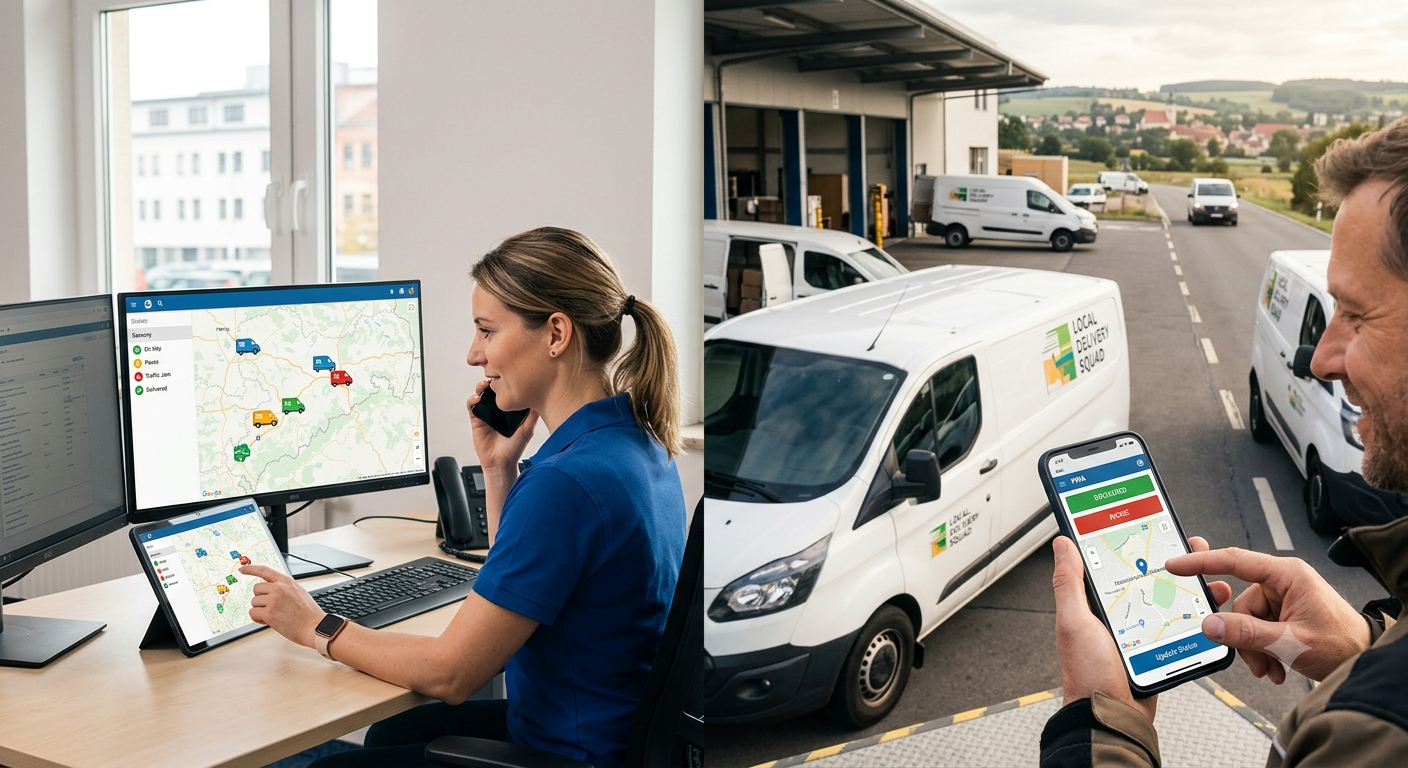
Fleet management app as a PWA: when it is the right choice
For small transport companies, the real question is not whether a fleet tool looks modern. It is whether drivers and office staff will actually use it every day. A progressive web app, or PWA, can be a strong fit when you want one shared tool for driver status, route updates, and simple coordination without forcing everyone through a heavy install process.
That matters when daily work depends on quick decisions. If a driver is delayed, on a break, or already finished, the office needs a clear update fast. A PWA can make that easier to access on mobile devices while still working like a web-based business tool. For a broader view of the operational features behind this topic, see the main guide on driver tracking for small transport companies.
Why a PWA can be easier to adopt
A PWA reduces friction. Drivers can open it from a phone, and office teams can use the same system in a browser. That lowers the chance of “we will use it later” becoming “we never used it at all.”
Why it helps daily operations
Instead of chasing updates by phone, managers can check status in one place. That supports better route planning, fewer interruptions, and clearer handovers between office and drivers.
Why it fits smaller teams
Smaller companies often need practical tools first, not complex software. A PWA can be a sensible step when the goal is to improve coordination without adding unnecessary process overhead.
What a fleet management PWA should do in practice
The value is not in the label. It is in the daily tasks the tool supports. For transport teams, the most useful setup is usually simple: show where drivers are, let them send status updates, and give the office a clearer view of what is happening on the road.
Live driver overview
Managers can see who is on route, who is paused, and which job is already completed.
Simple status updates
Drivers can send short updates such as traffic, break, arrived, or done without extra back-and-forth.
Better customer communication
When the office has clearer information, it can answer customer questions faster and with less guesswork.
Less manual coordination
A shared digital view reduces repeated calls, missed updates, and confusion about who is doing what.
When a PWA is better than a heavier app project
A PWA is often worth considering when speed of rollout, ease of access, and lower user friction matter more than a highly customized native app experience. For many small transport businesses, that is a practical business decision. The team needs a tool that supports operations now, not a long rollout that delays value.
- Use it when drivers need quick mobile access without a complicated install.
- Use it when office staff need one shared view of route and status updates.
- Use it when you want to improve coordination before adding more advanced features.
- Use it when adoption risk is a bigger concern than technical complexity.
If you are comparing implementation options, the related article Excel, WhatsApp or a Driver Tracking App? is a useful next read because it shows where manual tools stop being enough.
How this connects to driver tracking
A fleet management app as a PWA becomes especially useful when it supports driver tracking in a simple, business-friendly way. That can mean live location visibility, status updates, and a clearer handoff between drivers, dispatch, and customers. If you want the service side of that solution, the Driver Tracking App for Transport Companies page shows the core offer behind this topic.
For many managers, the decision comes down to one question: will this reduce daily friction? If the answer is yes, a PWA can be a smart way to start without overbuilding the first version.
A simple decision checklist
Good fit if
You need faster coordination, easier mobile access, and a tool your team can adopt quickly.
Reconsider if
Your process is still unclear and you have not defined what drivers and office staff should actually update.
Ready to plan your fleet app?
Talk through your workflow, compare options, and decide whether a PWA is the right starting point for your transport team.
Comments
0 published comments
No approved comments have been published yet.
Recommended Articles
Fresh insights from our blog

AI Automation for Small Businesses: What Is Actually Worth It?
Not every AI idea is worth the effort. This guide shows small businesses which workflows are worth automating first, how to judge readiness,...

CRM for Small Businesses: A Practical Guide to Starting Simple
A practical guide for owners and managers who want a simple CRM without turning sales into a software project. Learn when a CRM is worth it,...

Turn Your Website Into a Sales Machine: More Leads and Revenue
A practical guide for small businesses that want their website to do more than look good. Learn how clearer messaging, stronger trust, bette...

Medical Practice Website: Booking, Forms, Costs
A practical guide to building a medical practice website that helps patients book online, submit forms, and understand what affects cost.

Driver Tracking for Small Transport Companies: Features and Costs
A practical guide to driver tracking for small transport companies: what it does, what to look for, and how to think about cost and rollout.

Holiday Apartment Website with Booking System: What Owners Really Need
A practical guide for holiday apartment and serviced apartment owners who want a booking website that shows availability, builds trust and t...