

Turn Your Website Into a Sales Machine: More Leads and Revenue

A practical guide for small businesses that want their website to do more than look good. Learn how clearer messaging, stronger trust, better CTAs, SEO, and simpler lead paths turn traffic into real enquiries and sales.
Olymaris Team
Published on July 6, 2026
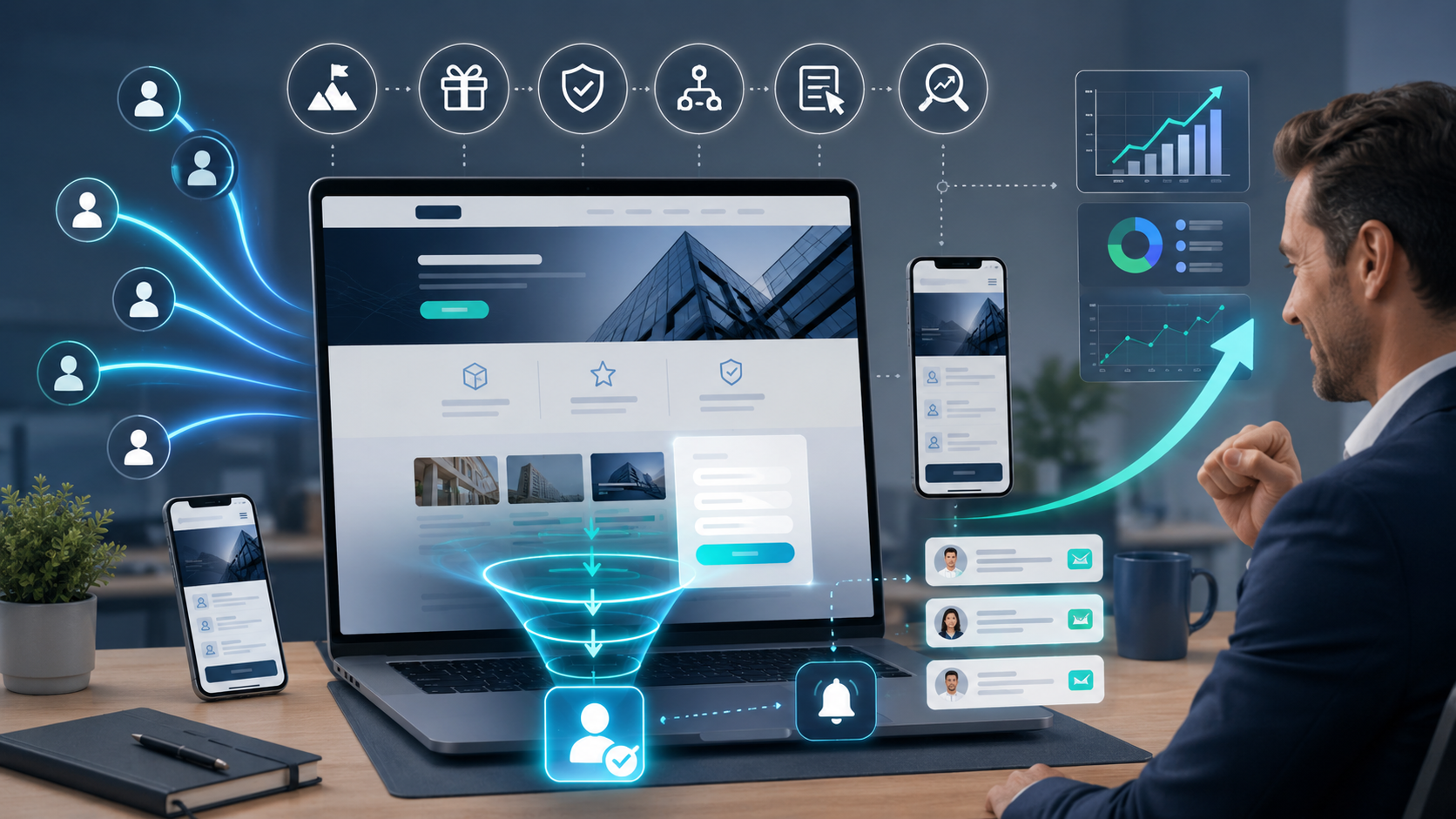
A website becomes a sales machine when it makes the next step obvious
Many small companies invest in a website and still feel disappointed by the business result. The site may look modern, load reasonably well, and describe the company in a professional tone, yet enquiries stay low. In most cases, the problem is not that the business has no demand. The problem is that the website behaves like a brochure instead of a sales system.
A sales-focused website helps visitors understand three things quickly: what you offer, why it matters, and what they should do next. If those answers are unclear, even good traffic can be wasted. If those answers are clear, the same website can produce more qualified leads without needing a full reinvention.
That is the idea behind Website Sales Machine: improve the existing website so it supports trust, enquiries, and measurable business growth.
Direct answer: what makes a website generate more leads?
A website generates more leads when the offer is clear, the page structure supports decision-making, trust appears before the ask, and the contact path is simple. Design matters, but only when it supports those business goals.
Clear positioning
Visitors should immediately understand who the service is for, what problem it solves, and why your offer is different.
Stronger offer structure
If the offer feels vague, people delay action. A sharper structure reduces hesitation and improves lead quality.
Clear CTAs and forms
Buttons, forms, and contact options should feel easy, relevant, and low-friction on both desktop and mobile.
Trust before contact
References, proof, process clarity, and useful detail help visitors feel safe enough to enquire.
Why many business websites underperform
They describe the company, not the customer problem
A visitor usually arrives with a need, not with interest in your company history. If the page opens with internal language, the value gets lost.
They ask for contact too early
If trust is weak, a contact form feels like a commitment. Visitors need enough confidence before they act.
They create friction in the lead path
Long forms, unclear buttons, scattered navigation, or too many choices can quietly reduce conversions.
They attract visits without buying intent
Traffic alone is not the goal. The better goal is attracting people who are actively looking for a solution.
The core parts of a sales-focused website
- Conversion audit: review where visitors lose momentum, where the message is weak, and where the contact path breaks down.
- Sharper positioning and offer structure: make the service easier to understand, compare, and buy into.
- Landing page structure with clear CTAs: each section should move the reader toward a sensible next step.
- Lead forms and contact paths optimization: reduce unnecessary fields and make the action feel easy and worthwhile.
- Trust elements and social proof: place reassurance where doubt usually appears, not only at the bottom of the page.
- SEO for high-intent visitors: align pages with searches from people who are closer to a decision.
- Mobile UX, page speed and analytics setup: improve usability and make results easier to measure.
What this means in business terms
For managers and founders, the real question is not whether a website has modern design trends. The real question is whether the site helps sales conversations start faster and with better-fit prospects.
Better lead quality
Clearer messaging filters out poor-fit visitors and attracts people who understand the offer.
Less wasted traffic
If you already get visits, conversion improvements can create value without relying only on more traffic.
More measurable decisions
Analytics and conversion tracking help you judge changes by outcomes, not opinions.
Who should improve their website first?
This approach is especially useful for service businesses, consultants, agencies, B2B providers, and growing companies that already have a website but feel it is underperforming commercially.
- You get traffic but too few enquiries.
- Your offer is strong in sales calls but weak on the website.
- Your site looks credible but does not create enough action.
- Your mobile experience makes contact harder than it should be.
- You want a clearer path from SEO visits to qualified leads.
A practical way to think about improvement
Do not start by asking whether you need a full redesign. Start by asking where the current website loses business momentum. Sometimes the biggest gains come from better structure, clearer copy, stronger trust placement, and simpler lead capture rather than a complete rebuild.
That is why a focused review matters. It helps separate cosmetic issues from commercial issues. A page can look polished and still fail to convert. Another page can be visually simple and still perform well because the message, trust, and CTA are aligned.
Final takeaway
A website becomes a sales machine when it reduces confusion, builds confidence, and guides the visitor toward a clear next step. For small businesses, that usually means improving the existing site around conversion, positioning, trust, SEO intent, mobile usability, and measurement.
If your website feels more like a digital brochure than a business asset, the opportunity is not only to make it look better. The bigger opportunity is to make it work harder.
Next step
If you want to improve enquiries, lead quality, and the commercial performance of your current site, explore the Website Sales Machine service or contact us to discuss your website.
Comments
0 published comments
No approved comments have been published yet.
Recommended Articles
Fresh insights from our blog

AI Automation for Small Businesses: What Is Actually Worth It?
Not every AI idea is worth the effort. This guide shows small businesses which workflows are worth automating first, how to judge readiness,...

CRM for Small Businesses: A Practical Guide to Starting Simple
A practical guide for owners and managers who want a simple CRM without turning sales into a software project. Learn when a CRM is worth it,...

Medical Practice Website: Booking, Forms, Costs
A practical guide to building a medical practice website that helps patients book online, submit forms, and understand what affects cost.

Driver Tracking for Small Transport Companies: Features and Costs
A practical guide to driver tracking for small transport companies: what it does, what to look for, and how to think about cost and rollout.

Holiday Apartment Website with Booking System: What Owners Really Need
A practical guide for holiday apartment and serviced apartment owners who want a booking website that shows availability, builds trust and t...

Hotel Website with Direct Booking: What It Needs
A practical guide for hotel owners and managers who want more direct bookings, clearer guest journeys, and a website that supports sales.