

Driver Tracking for Small Transport Companies: Features and Costs

A practical guide to driver tracking for small transport companies: what it does, what to look for, and how to think about cost and rollout.
Olymaris Team
Published on May 26, 2026
Driver Tracking for Small Transport Companies: Features and Costs
For small transport companies, driver tracking is usually not about adding more software. It is about reducing daily friction: fewer calls to ask where a driver is, clearer delivery updates, and better control over routes, breaks, and completed jobs. If your office still relies on phone calls and manual check-ins, a simple tracking app can make operations easier to manage without turning dispatch into a technical project.
This guide explains what a driver tracking solution should do, which features matter most for small teams, how to think about cost, and when it makes sense to start with a focused version instead of a large system. The goal is to help owners and managers make a practical decision, not to overcomplicate the buying process.
What it should solve
Less back-and-forth, better route visibility, and faster answers for customers and the office.
What to expect
A mobile-friendly app or PWA, live driver status, and a clear overview for dispatch and management.
What driver tracking means in day-to-day operations
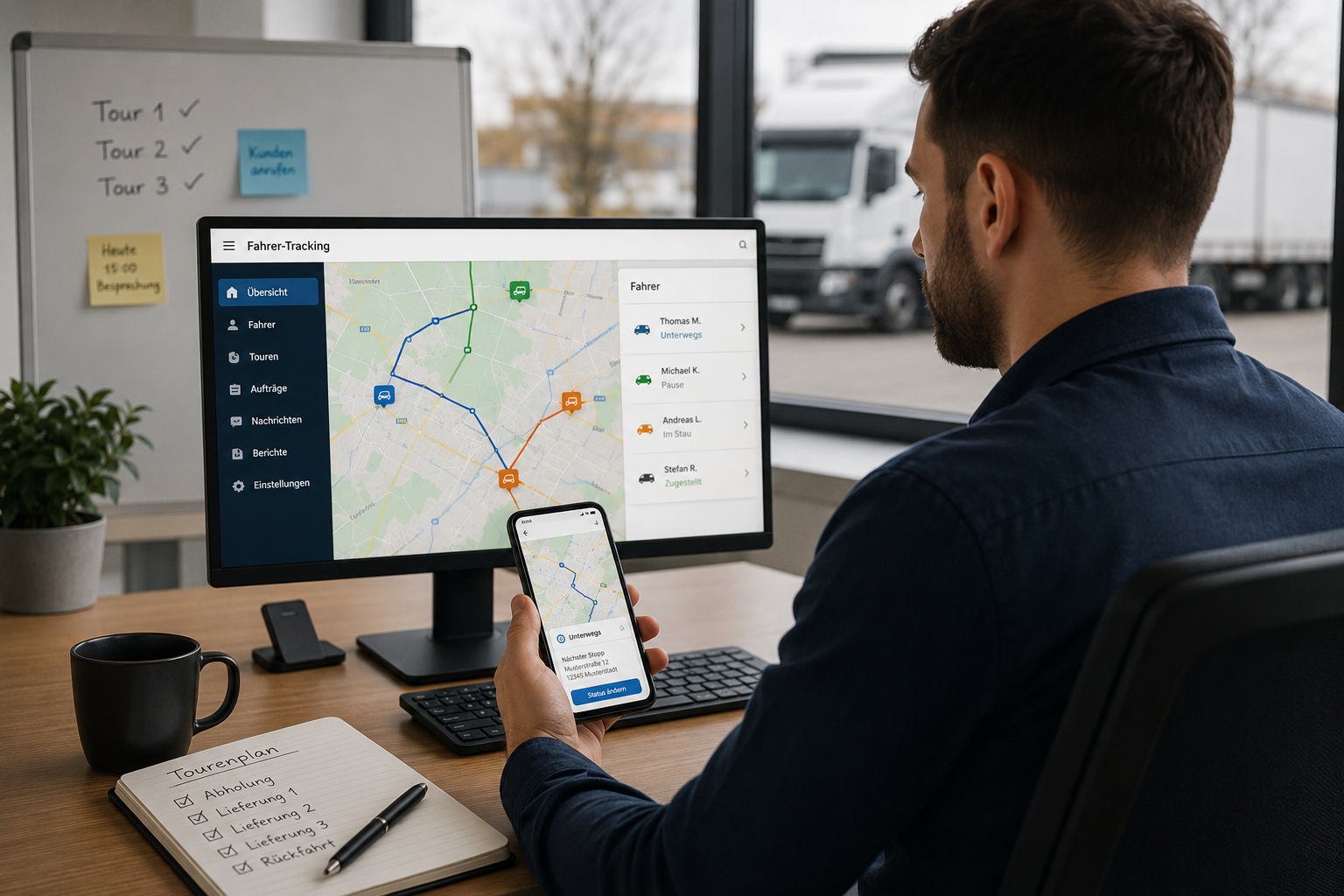
In practice, driver tracking gives your team a shared view of where drivers are and what status they are in. That can include on route, on break, delayed by traffic, arrived, or completed. For a small company, this is valuable because it replaces guesswork with a simple operational picture. The office can answer customer questions faster, dispatch can react to delays sooner, and drivers are interrupted less often.
The business value is straightforward: fewer interruptions, fewer missed updates, and less time spent chasing information. That matters especially when one person in the office is handling calls, planning, and customer communication at the same time.
Core features small companies usually need
Live location overview
The office can see where drivers are without calling each person one by one.
Simple driver status
Status updates such as on route, break, traffic, or completed make the day easier to manage.
Tracking link for office or customer
A shareable link can reduce follow-up calls and help customers understand progress.
Mobile use as app or PWA
Drivers need something easy to use on the road, not a tool that slows them down.
Working time and route overview
It becomes easier to review trips and understand what happened during the day.
Better planning for routes and deliveries
When the team sees the current situation, it can plan the next move with less delay.
How to think about cost without overbuying
For small transport companies, cost should be judged against daily time savings and fewer coordination mistakes. The supplied service context starts from €4,500, with the final price depending on scope, user roles, tracking logic, design, and reporting needs. That is useful because it frames the decision around what the business actually needs, not around a one-size-fits-all package.
A lean first version is often the safest route. Start with the features that remove the most friction: live location, status updates, and a simple office view. If the team later needs more reporting or more advanced workflows, those can be added after the business has proven the daily value.
A practical buying question
Will this reduce calls, improve planning, and help the office answer customers faster? If yes, the investment is easier to justify.
Implementation: what a small team should plan for
The supplied service context indicates a basic implementation in around 90 working days. For a small company, that timeline is helpful because it sets a realistic expectation: this is not an overnight tool, but it is also not a multi-year transformation. The main planning questions are who will use it, what statuses are needed, and how the office will react to the new information.
The best rollout is usually simple. Keep the first version focused on daily operations, train the office and drivers on the minimum needed steps, and avoid adding features that do not solve a real problem. That keeps adoption higher and reduces the risk of a system that looks useful but is ignored in practice.
Who benefits most from driver tracking
This kind of solution is a strong fit for small and medium transport companies, courier teams, local delivery services, logistics providers, and businesses with several drivers or vehicles. It is especially useful when the office spends too much time asking where people are, whether a delivery is late, or whether a job has already been completed.
If your business depends on reliable timing and clear communication, driver tracking can improve both customer experience and internal control. The value is not only in the map view; it is in the decisions that become easier because the team has better information. For small operators, this usually means faster answers, cleaner coordination, and a more professional service without adding unnecessary complexity.
When to choose a focused solution
- You want fewer calls between office, drivers, and customers.
- You need a clear view of routes and delivery status.
- You prefer a simple tool that drivers can actually use.
- You want to start with a practical scope before expanding later.
FAQ: driver tracking for small transport teams
Do small transport companies really need driver tracking?
They need it when daily coordination depends too much on phone calls, manual updates, or guessing where a driver is. A focused tracking app gives the office a clearer overview and helps drivers avoid repeated interruptions during the day.
Should the first version include advanced reporting?
Not always. For many small teams, the first version should focus on live location, driver status, and a simple office view. Advanced reports can be added later when the team knows which data is actually useful for planning and management.
Can customers receive delivery updates through the system?
Yes, if the project scope includes a tracking link or customer-facing update view. This can reduce follow-up calls and make the company look more organized, especially when timing matters and customers want a quick answer.
Next step
If you are comparing options for your transport business, start with the operational problem you want to solve first. Then check whether the feature set, rollout effort, and cost match the way your team actually works.
Comments
0 published comments
No approved comments have been published yet.
Recommended Articles
Fresh insights from our blog

AI Automation for Small Businesses: What Is Actually Worth It?
Not every AI idea is worth the effort. This guide shows small businesses which workflows are worth automating first, how to judge readiness,...

CRM for Small Businesses: A Practical Guide to Starting Simple
A practical guide for owners and managers who want a simple CRM without turning sales into a software project. Learn when a CRM is worth it,...

Turn Your Website Into a Sales Machine: More Leads and Revenue
A practical guide for small businesses that want their website to do more than look good. Learn how clearer messaging, stronger trust, bette...

Medical Practice Website: Booking, Forms, Costs
A practical guide to building a medical practice website that helps patients book online, submit forms, and understand what affects cost.

Holiday Apartment Website with Booking System: What Owners Really Need
A practical guide for holiday apartment and serviced apartment owners who want a booking website that shows availability, builds trust and t...

Hotel Website with Direct Booking: What It Needs
A practical guide for hotel owners and managers who want more direct bookings, clearer guest journeys, and a website that supports sales.