


What Does a Driver Tracking App Cost?

A practical cost guide for transport companies: what drives the price of a driver tracking app, what to budget for, and how to plan the rollout.
Olymaris Team
Published on June 9, 2026
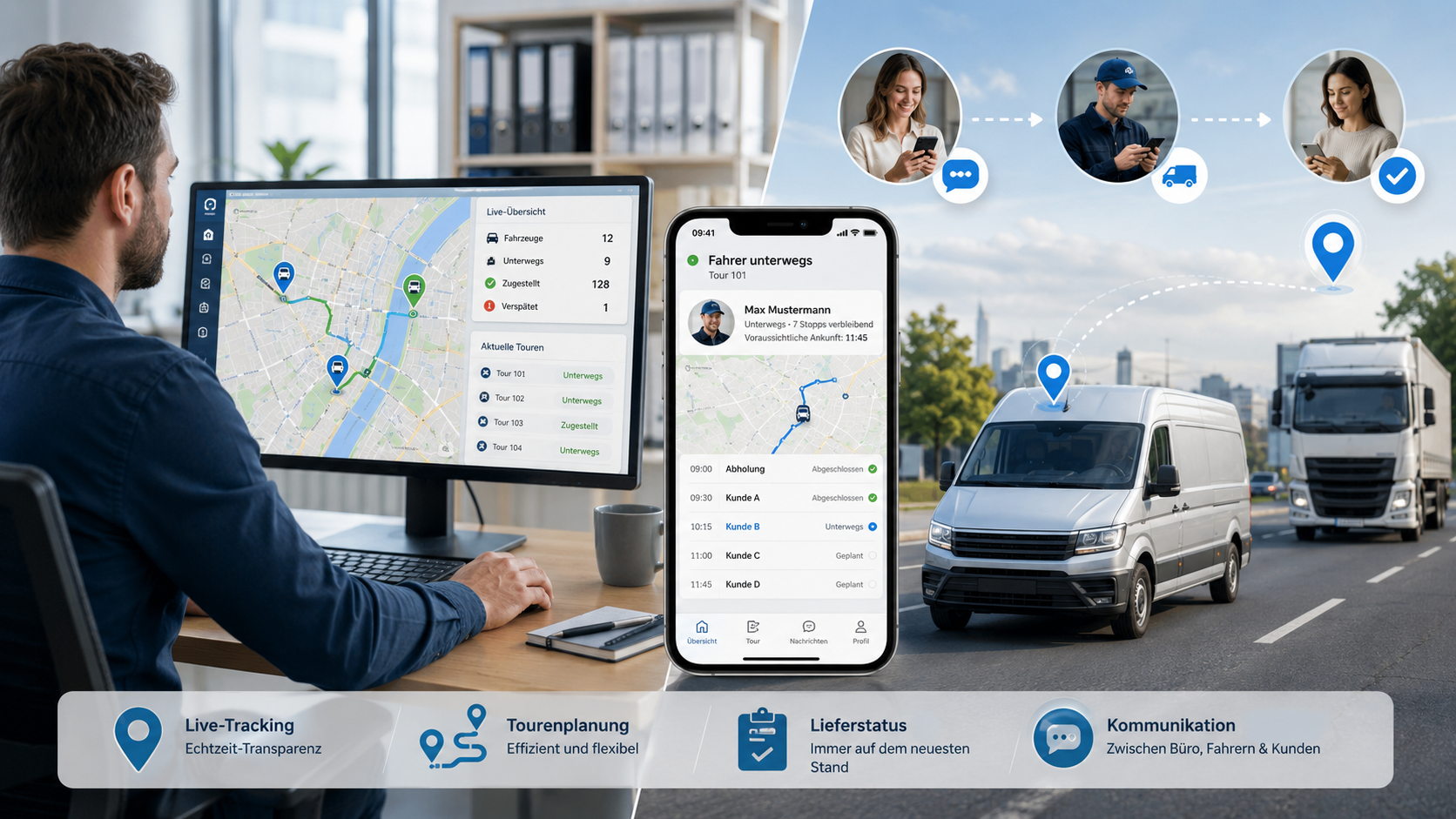
What does a driver tracking app cost?
For small transport companies, the real question is not only the price tag. It is whether the app reduces calls, improves route visibility, and helps the office make faster decisions. A driver tracking app can start from €4,500, with the final cost depending on scope, user roles, tracking logic, and reporting needs.
If you are comparing options, think in terms of business impact: fewer follow-up calls, clearer delivery status, and less time spent chasing updates. That is usually where the value appears first.
What usually affects the price
- How many drivers and office users need access
- Whether you need live location, status updates, or both
- Whether customers should receive a tracking link
- How much reporting and history you want to keep
- Whether the app should work as a mobile app or PWA
What a basic rollout can cover
- Live driver location overview
- Driver status such as on route, break, traffic, or completed
- Better planning for routes and deliveries
- Fewer follow-up calls between office, drivers, and customers
- Easier overview of working times and routes
A practical way to budget
For managers, the safest approach is to budget for the minimum version that solves the daily problem first. If the office mainly needs to know where drivers are and whether a delivery is delayed, start there. You can add more detail later instead of paying for features the team will not use.
The basic implementation is expected in around 90 working days. That makes it easier to plan around operations, onboarding, and internal testing without disrupting daily work.
When the app pays off
The app is most useful when your team spends too much time asking the same questions: Where is the driver? Is the delivery still on time? Has the job been completed? If those questions happen every day, the cost is easier to justify because the app reduces friction across the office, drivers, and customers.
Office teams
Need a clearer view of routes and status without constant calls.
Drivers
Can share simple updates instead of handling repeated check-ins.
Customers
Get more realistic delivery information when plans change.
Related guide for a broader overview
If you want the wider decision framework behind features and rollout planning, read the Driver Tracking for Small Transport Companies: Features and Costs guide. This page stays narrower and focuses on the cost question so you can budget with less guesswork.
What Olymaris can build
We build a Driver Tracking App for Transport Companies that fits daily operations: live driver location, status updates, route visibility, and a simpler way to keep office and field teams aligned.
How to decide if the cost is right
- Start with the daily problem you want to remove.
- Choose the smallest version that solves it well.
- Check whether the team will actually use the app every day.
- Plan for a rollout that fits your operations, not the other way around.
Next step
If you are comparing options for your transport business, we can help you define the right scope and budget before you commit to development.
Comments
0 published comments
No approved comments have been published yet.
Recommended Articles
Fresh insights from our blog

AI Automation for Small Businesses: What Is Actually Worth It?
Not every AI idea is worth the effort. This guide shows small businesses which workflows are worth automating first, how to judge readiness,...

CRM for Small Businesses: A Practical Guide to Starting Simple
A practical guide for owners and managers who want a simple CRM without turning sales into a software project. Learn when a CRM is worth it,...

Turn Your Website Into a Sales Machine: More Leads and Revenue
A practical guide for small businesses that want their website to do more than look good. Learn how clearer messaging, stronger trust, bette...

Medical Practice Website: Booking, Forms, Costs
A practical guide to building a medical practice website that helps patients book online, submit forms, and understand what affects cost.

Driver Tracking for Small Transport Companies: Features and Costs
A practical guide to driver tracking for small transport companies: what it does, what to look for, and how to think about cost and rollout.

Holiday Apartment Website with Booking System: What Owners Really Need
A practical guide for holiday apartment and serviced apartment owners who want a booking website that shows availability, builds trust and t...