


Digital Time Tracking for Drivers: A Practical Fit

See how digital time tracking helps transport teams record driver hours, reduce manual follow-up, and keep daily operations clearer.
Olymaris Team
Published on June 25, 2026
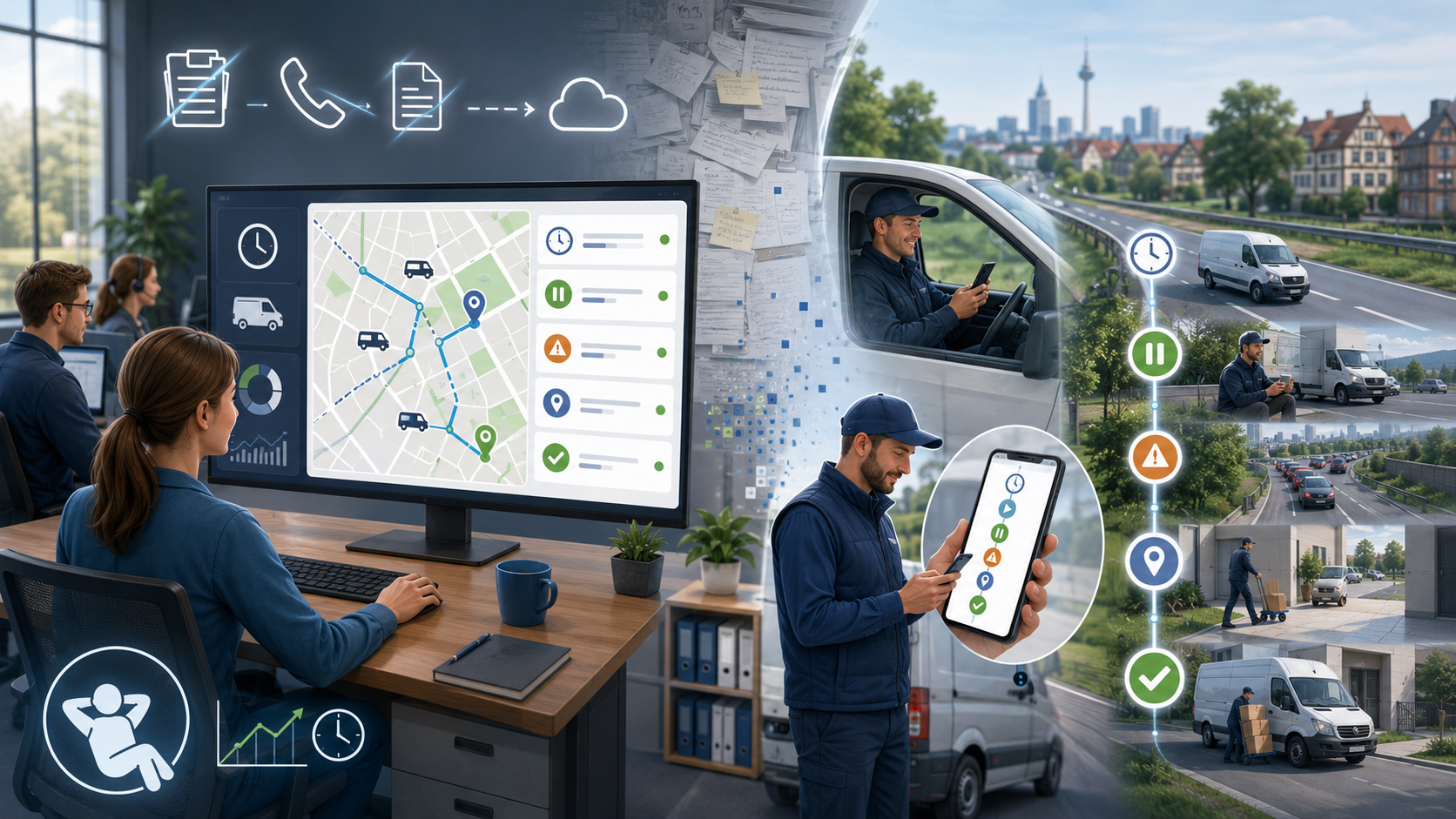
Digital time tracking for drivers: what it solves in daily work
For transport companies, time tracking is often where small delays turn into bigger admin work. Drivers finish a route, the office asks for updates, and someone has to reconstruct hours, breaks, and completed jobs from calls or messages. Digital time tracking makes that process simpler. It gives managers a clearer view of working time, route progress, and status changes without forcing the team into a complicated system.
This article focuses on the practical side: when digital time tracking is useful, how it supports dispatch and office teams, and why it works best when it is part of a broader driver tracking strategy for small transport companies. If your business wants fewer follow-up calls and better day-to-day clarity, this is the right place to start.
Why it matters
Manual time notes are easy to forget and hard to compare. Digital capture helps the office see working time and route activity in one place.
What managers gain
Less back-and-forth, faster decisions, and a better basis for planning the next shift, delivery, or customer update.
What drivers need
A simple mobile flow that lets them mark status changes, breaks, and completed work without extra admin burden.
Where digital time tracking helps most
Route completion and handover
When a driver finishes a route, the office can see the status sooner and hand work over without waiting for a long call.
Breaks and delays
If traffic, a break, or an unexpected stop changes the plan, the team can react with less guesswork.
Working time overview
Managers get a clearer picture of hours and route activity, which helps with planning and internal follow-up.
Customer communication
When the office knows what is happening, it can answer customer questions faster and with more confidence.
A simple setup that fits small teams
For small companies and startups, the best solution is usually the one people actually use. That means a clear mobile experience for drivers, a straightforward office view, and status updates that do not require training every week. The goal is not to add another tool. The goal is to reduce friction in daily coordination.
- Drivers can update status from a phone or PWA.
- The office can review time and route progress in one place.
- Managers can spot delays earlier and adjust plans sooner.
- Teams spend less time reconstructing the day after the fact.
If you are comparing options, it helps to look at the broader workflow too. A dedicated Driver Tracking App for Transport Companies can combine time visibility with live status and route context, which is often more useful than a standalone time sheet.
How to decide if it is worth it
Good fit if...
Your office often asks where drivers are, which job is done, or how long a route took.
Less urgent if...
You already have a reliable process and only need occasional manual checks.
For many transport teams, the real value is not just recording time. It is reducing uncertainty, saving office hours, and making the next decision easier.
Next step
If you want to improve driver time tracking without adding unnecessary complexity, start with a solution that fits your routes, team size, and daily communication habits.
Ready to discuss your setup?
Talk to us about a practical driver tracking solution for your transport team.
Comments
0 published comments
No approved comments have been published yet.
Recommended Articles
Fresh insights from our blog

AI Automation for Small Businesses: What Is Actually Worth It?
Not every AI idea is worth the effort. This guide shows small businesses which workflows are worth automating first, how to judge readiness,...

CRM for Small Businesses: A Practical Guide to Starting Simple
A practical guide for owners and managers who want a simple CRM without turning sales into a software project. Learn when a CRM is worth it,...

Turn Your Website Into a Sales Machine: More Leads and Revenue
A practical guide for small businesses that want their website to do more than look good. Learn how clearer messaging, stronger trust, bette...

Medical Practice Website: Booking, Forms, Costs
A practical guide to building a medical practice website that helps patients book online, submit forms, and understand what affects cost.

Driver Tracking for Small Transport Companies: Features and Costs
A practical guide to driver tracking for small transport companies: what it does, what to look for, and how to think about cost and rollout.

Holiday Apartment Website with Booking System: What Owners Really Need
A practical guide for holiday apartment and serviced apartment owners who want a booking website that shows availability, builds trust and t...