


Hotel Website with Direct Booking: What It Needs

A practical guide for hotel owners and managers who want more direct bookings, clearer guest journeys, and a website that supports sales.
Olymaris Team
Published on May 20, 2026 · Updated May 25, 2026
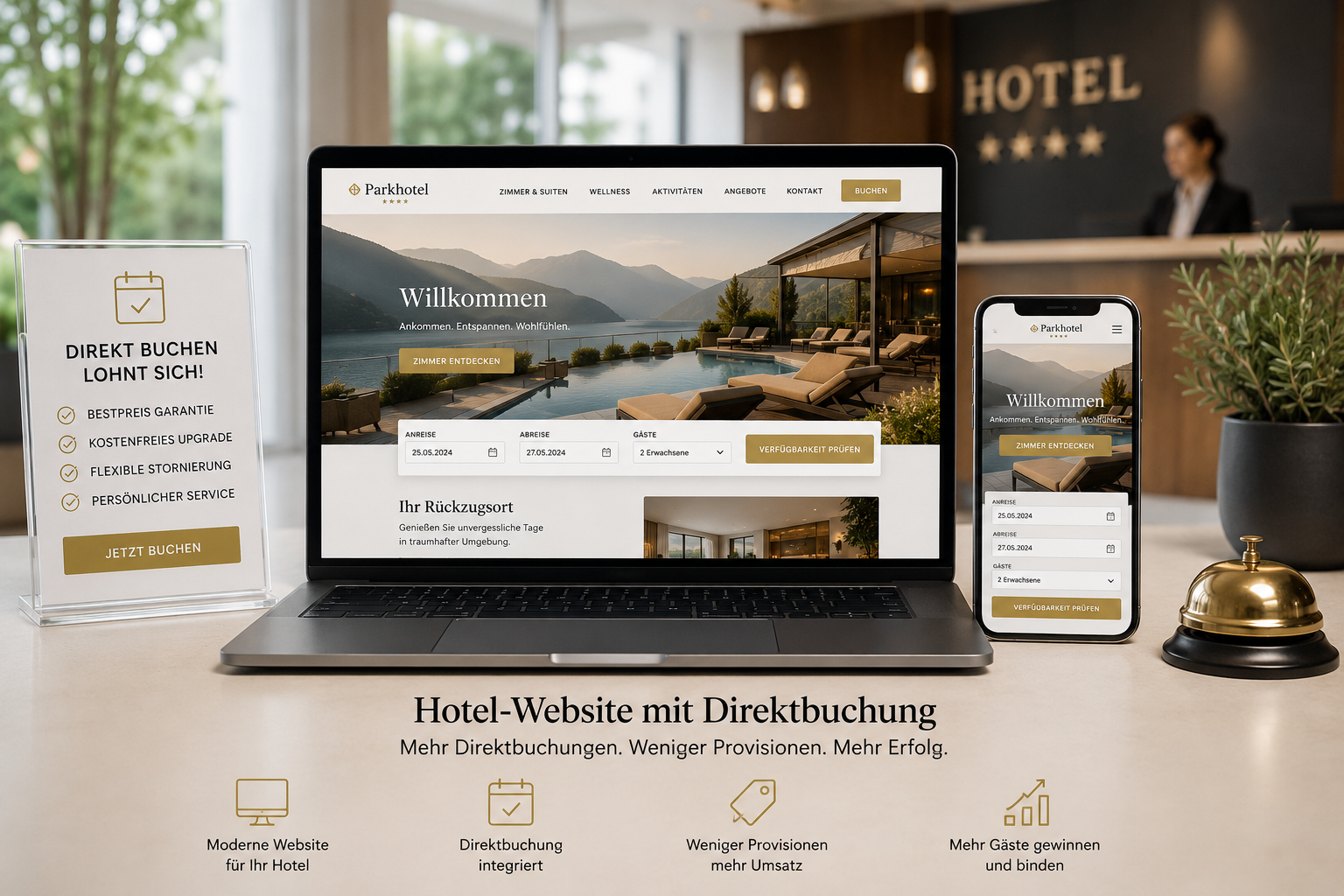
Hotel Website with Direct Booking: What It Needs
If your hotel still depends too much on booking portals, your website should do more than look polished. It should help guests decide faster, reduce manual work for your team, and turn interest into direct reservations.
Quick answer: what makes a hotel website work?
A strong hotel website gives guests the information they need to book with confidence: room pages, clear prices or starting rates, a simple booking or enquiry flow, trust signals, mobile-friendly design, and search visibility for the terms people actually use before they book.
For guests
Fast answers, easy comparison, and a clear next step.
For managers
Less back-and-forth, better lead handling, and more control.
For the business
More direct bookings and less dependence on third-party platforms.
Why direct booking matters
Direct booking is not only about saving commission. It is about owning the guest relationship. When a guest books through your own website, you can present your rooms, offers, policies, and upsells in a way that fits your property instead of a generic listing format.
That matters for small hotels, guesthouses, pensions, serviced apartments, and family-run properties that need a practical sales channel, not just another online brochure.
The goal is not to remove every booking platform. The goal is to make your own website strong enough that direct booking becomes the easier and more attractive option for the right guest.
Core features every hotel website should have
Room pages that help guests decide
Each room page should answer the practical questions guests ask before booking: who the room suits, what is included, what it costs, and why it is worth choosing.
A simple booking or enquiry flow
If a guest is ready, the next step should be obvious. Keep the path short, clear, and easy to use on mobile.
Trust signals that reduce hesitation
Photos, location details, policies, reviews, parking, breakfast, and contact options help guests feel safe booking directly.
Mobile-first speed and clarity
Many hotel searches happen on phones. If the site loads slowly or hides the booking path, the guest will leave.
Where the website and your tools should connect
A hotel website does not need to replace your existing systems. It should connect to them in a way that reduces mistakes and saves time. If you manage multiple channels, a channel manager integration can help keep availability and rates aligned.
If your team also handles enquiries, follow-ups, or repeat guests, a simple CRM setup can make the process easier to manage. The point is not more software. The point is less friction between interest and revenue.
For hotels that want to grow beyond room bookings, the same website can also support sell vouchers online and sell hotel packages directly when those offers are presented clearly.
Direct booking vs. offer pages: what is the difference?
A direct booking page is built to move a guest from interest to reservation. An offer page is built to explain a package, special deal, or seasonal stay. Both can work well, but they serve different jobs.
Use direct booking when the guest is ready to choose dates and reserve a room. Use offer pages when you want to make a specific stay easier to understand and more attractive. The best hotel websites use both, but they keep the purpose of each page clear.
SEO for hotel websites should match real guest intent
Hotel SEO works best when it reflects how people search before they book. That means location, room type, parking, breakfast, family stays, business travel, pet-friendly options, and nearby attractions should all be easy to find.
Search engines and AI tools prefer pages that answer questions directly. If your site clearly explains what guests get, where you are, and how booking works, it becomes easier to crawl, easier to understand, and more useful to visitors.
If you are planning a relaunch, technical details matter too. Redirects, metadata, page speed, and indexation should be checked before launch so the new site does not lose visibility.
When should a hotel invest in a better website?
- You rely too much on booking portals and want more direct reservations.
- Your current site looks outdated or is hard to use on mobile.
- Guests call because basic information is hard to find online.
- Your enquiry process creates manual work instead of organised leads.
- You want to sell packages, vouchers, or seasonal offers more effectively.
What this guide covers, and what comes next
This page gives you the overview: what a direct-booking hotel website needs, why it matters, and how the main pieces fit together. Deeper implementation details belong in related articles, so you can make decisions without getting lost in technical detail.
If you want to go further, the next step is to review your room pages, booking flow, and search visibility together instead of treating them as separate tasks.
Comments
0 published comments
No approved comments have been published yet.
Recommended Articles
Fresh insights from our blog

AI Automation for Small Businesses: What Is Actually Worth It?
Not every AI idea is worth the effort. This guide shows small businesses which workflows are worth automating first, how to judge readiness,...

CRM for Small Businesses: A Practical Guide to Starting Simple
A practical guide for owners and managers who want a simple CRM without turning sales into a software project. Learn when a CRM is worth it,...

Turn Your Website Into a Sales Machine: More Leads and Revenue
A practical guide for small businesses that want their website to do more than look good. Learn how clearer messaging, stronger trust, bette...

Medical Practice Website: Booking, Forms, Costs
A practical guide to building a medical practice website that helps patients book online, submit forms, and understand what affects cost.

Driver Tracking for Small Transport Companies: Features and Costs
A practical guide to driver tracking for small transport companies: what it does, what to look for, and how to think about cost and rollout.

Holiday Apartment Website with Booking System: What Owners Really Need
A practical guide for holiday apartment and serviced apartment owners who want a booking website that shows availability, builds trust and t...