


Tour Planning for Small Delivery Services

A practical guide for small delivery teams on planning routes, reducing daily chaos, and using driver tracking to keep deliveries on schedule.
Olymaris Team
Published on June 19, 2026
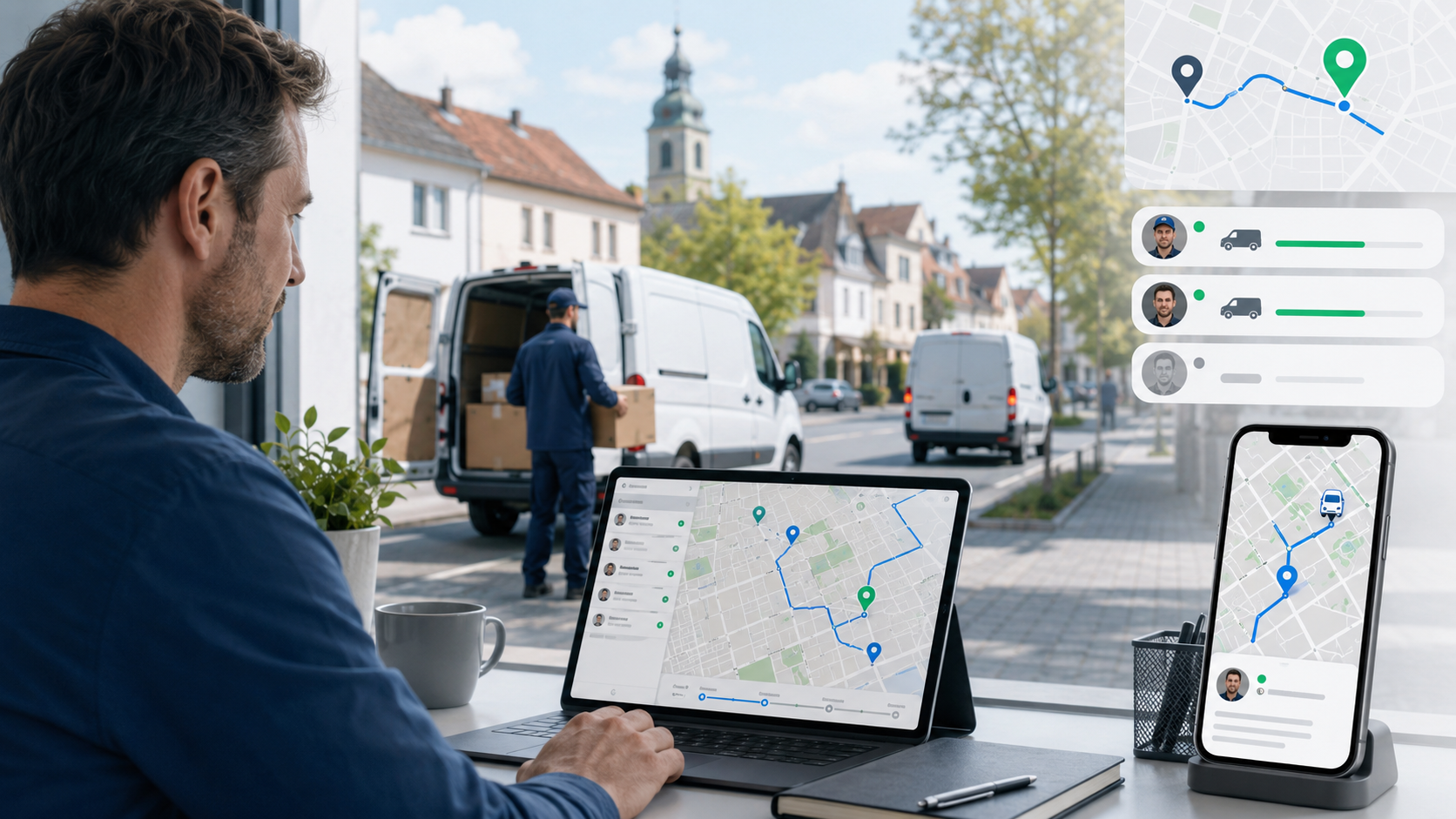
Tour planning works best when the office and drivers see the same picture
For small delivery services, tour planning is rarely about perfect software. It is about making the day easier to run. When orders change, traffic slows a route, or a driver finishes early, the office needs a quick way to adjust without starting over. That is where a driver tracking app can help.
The goal is simple: fewer calls, clearer status updates, and better decisions about who should take the next stop. If your team still plans routes in spreadsheets and then spends the day chasing updates, the process is probably costing more time than it should.
What small delivery teams need from tour planning
Small companies do not need a complex dispatch tower. They need a practical way to answer a few daily questions: Which driver is closest? Which delivery is delayed? Which route can be shortened? Which stop should move to tomorrow? Good tour planning helps the business make those calls faster.
Start with the real workload
Plan around the number of stops, loading time, and the hours your team can actually cover.
Keep one live view
When the office can see driver location and status, it becomes easier to move work without confusion.
Reduce avoidable calls
A simple status like on route, break, traffic, or completed saves time for both office and driver.
How driver tracking improves route decisions
A tracking app does not replace planning. It makes planning more realistic. If a driver is stuck in traffic, the office can see it early and decide whether to reassign a stop, call the customer, or shift the next delivery. That reduces wasted time and helps the business keep promises that matter.
- See which route is moving slowly before the delay becomes a bigger problem.
- Use status updates to decide whether a stop can still fit into the same tour.
- Share a tracking link when a customer needs a clearer delivery window.
- Keep working times and completed trips easier to review later.
A simple planning routine that works
For many small delivery services, the best routine is not complicated. Build the route in the morning, check the first status updates after departure, and review changes during the day. If a driver finishes early, the office can add a nearby stop. If traffic builds up, the team can move a less urgent delivery to a later slot.
Morning planning
Set the first route based on distance, priority, and realistic driving time.
Midday adjustments
Use live driver status to react when the day changes faster than expected.
Customer updates
Give clearer answers instead of guessing when a delivery will arrive.
End-of-day review
Look back at completed routes to spot repeat delays and improve the next plan.
Where the parent guide fits in
If you are still deciding whether driver tracking is worth it, the main guide explains the broader feature set and cost thinking. This article stays focused on one operational question: how to plan tours better when your team is small and every delay affects the whole day.
When a driver tracking app becomes useful
The app is especially useful when your office spends too much time asking where drivers are, when routes change often, or when customers want more accurate delivery updates. In that situation, tour planning becomes less about guesswork and more about making small, fast decisions with better information.
If that sounds familiar, the Driver Tracking App for Transport Companies can support the daily planning process without adding unnecessary complexity.
Next step
If you want tour planning to feel calmer and more predictable, start with a simple live view of drivers and delivery status. That gives small teams a practical way to plan, adjust, and finish the day with fewer surprises.
Comments
0 published comments
No approved comments have been published yet.
Recommended Articles
Fresh insights from our blog

AI Automation for Small Businesses: What Is Actually Worth It?
Not every AI idea is worth the effort. This guide shows small businesses which workflows are worth automating first, how to judge readiness,...

CRM for Small Businesses: A Practical Guide to Starting Simple
A practical guide for owners and managers who want a simple CRM without turning sales into a software project. Learn when a CRM is worth it,...

Turn Your Website Into a Sales Machine: More Leads and Revenue
A practical guide for small businesses that want their website to do more than look good. Learn how clearer messaging, stronger trust, bette...

Medical Practice Website: Booking, Forms, Costs
A practical guide to building a medical practice website that helps patients book online, submit forms, and understand what affects cost.

Driver Tracking for Small Transport Companies: Features and Costs
A practical guide to driver tracking for small transport companies: what it does, what to look for, and how to think about cost and rollout.

Holiday Apartment Website with Booking System: What Owners Really Need
A practical guide for holiday apartment and serviced apartment owners who want a booking website that shows availability, builds trust and t...