

Eventbrite or Your Own Ticket Shop?

Compare Eventbrite with an owned ticket shop and decide what fits your event business, budget, and customer experience best.
Olymaris Team
Published on June 8, 2026
Eventbrite or your own ticket shop?
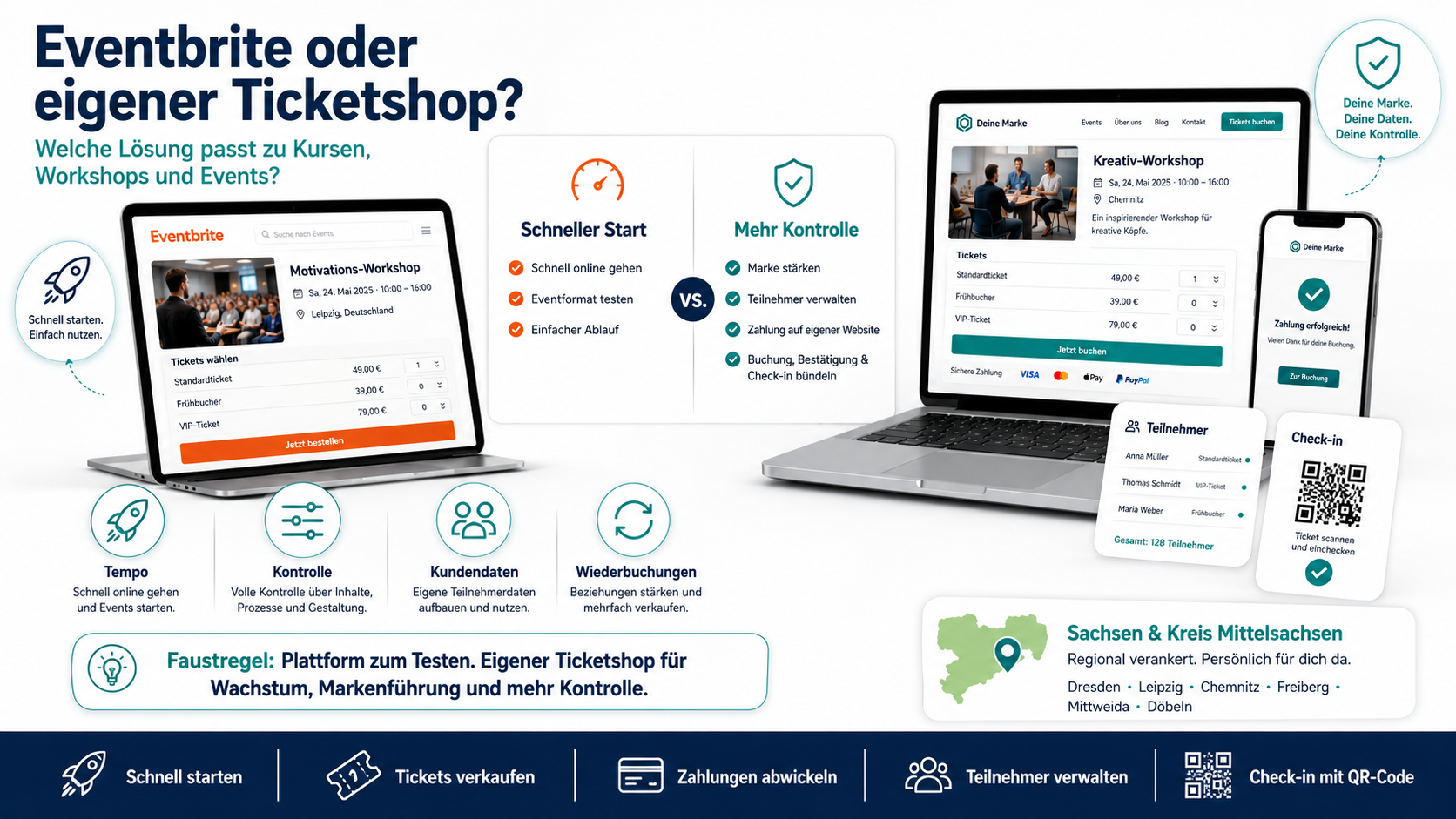
If you sell workshops, courses, or live events, the real question is not only where tickets are listed. It is how much control you want over the customer journey, the data, and the sales process. Eventbrite can be a fast way to start. An owned ticket shop can be a better long-term fit when your event sales become part of your brand and your business model.
For small companies and startups, the best choice often depends on three things: how often you run events, how much manual admin you can afford, and whether you want customers to stay on your own website from discovery to checkout.
When Eventbrite is a good fit
Eventbrite can work well if you need a quick launch, a simple setup, and a familiar booking flow for a one-off event or a small series. It reduces the time needed to get started and can be useful when your team is still testing demand.
When your own ticket shop wins
An owned ticket shop is stronger when you want direct customer relationships, a branded checkout, and more control over pricing, attendee data, and follow-up communication. It also helps when events are a recurring revenue channel rather than a side activity.
The business trade-off
The platform route can be faster at the start. The owned route can be stronger over time because it keeps more of the experience on your site and gives you more room to build trust, repeat bookings, and better reporting.
A practical way to decide
Choose Eventbrite if you need speed
- You want to publish quickly.
- You are testing a new event idea.
- You do not yet need a deeper booking workflow.
Choose your own ticket shop if you need control
- You want the booking flow to match your brand.
- You need attendee and capacity management.
- You want a direct path from event page to payment and confirmation.
This is where an Event Website with Online Ticket Shop becomes useful. It gives you a single place to present the event, sell tickets, manage seats, and keep the customer relationship on your own site.
What changes for your team
The biggest difference is not technical. It is operational. With a platform, you often work inside someone else’s system. With your own ticket shop, you can shape the process around your sales goals, your event calendar, and your follow-up needs.
That matters if you sell training sessions, workshops, or recurring events and want fewer manual steps for bookings, confirmations, and check-in. It also matters if you want to build a stronger brand instead of sending people to a third-party page that looks like everyone else’s.
How this fits a growing event business
For a small business, the right setup should save time, reduce confusion, and make sales easier to track. If you only run one event a year, a platform may be enough. If events are becoming part of your offer, an owned ticket shop can support better margins, better branding, and a cleaner customer journey.
A simple rule: use a platform to test demand, then move to your own ticket shop when you want more control, more repeat bookings, and a more professional sales process.
Next step for your event website
If you are comparing Eventbrite with a branded solution, the next step is to map your booking flow: event page, ticket selection, payment, confirmation, and attendee management. That makes the decision clearer and helps you avoid building a system that is either too limited or more complex than you need.
You can also compare this topic with our main guide on why event websites need to sell and the related article on Stripe payments for event ticket sales.
Ready to compare options for your event sales?
Talk to us about the right setup for your event website and ticket flow.
Comments
0 published comments
No approved comments have been published yet.
Recommended Articles
Fresh insights from our blog

AI Automation for Small Businesses: What Is Actually Worth It?
Not every AI idea is worth the effort. This guide shows small businesses which workflows are worth automating first, how to judge readiness,...

CRM for Small Businesses: A Practical Guide to Starting Simple
A practical guide for owners and managers who want a simple CRM without turning sales into a software project. Learn when a CRM is worth it,...

Turn Your Website Into a Sales Machine: More Leads and Revenue
A practical guide for small businesses that want their website to do more than look good. Learn how clearer messaging, stronger trust, bette...

Medical Practice Website: Booking, Forms, Costs
A practical guide to building a medical practice website that helps patients book online, submit forms, and understand what affects cost.

Driver Tracking for Small Transport Companies: Features and Costs
A practical guide to driver tracking for small transport companies: what it does, what to look for, and how to think about cost and rollout.

Holiday Apartment Website with Booking System: What Owners Really Need
A practical guide for holiday apartment and serviced apartment owners who want a booking website that shows availability, builds trust and t...