


Hotel Website SEO: How to Rank for Guests Who Are Ready to Book

A practical SEO guide for hotel owners and managers who want their website to appear for high-intent guest searches, local queries and booking-ready traffic.
Olymaris Team
Published on May 22, 2026 · Updated May 26, 2026
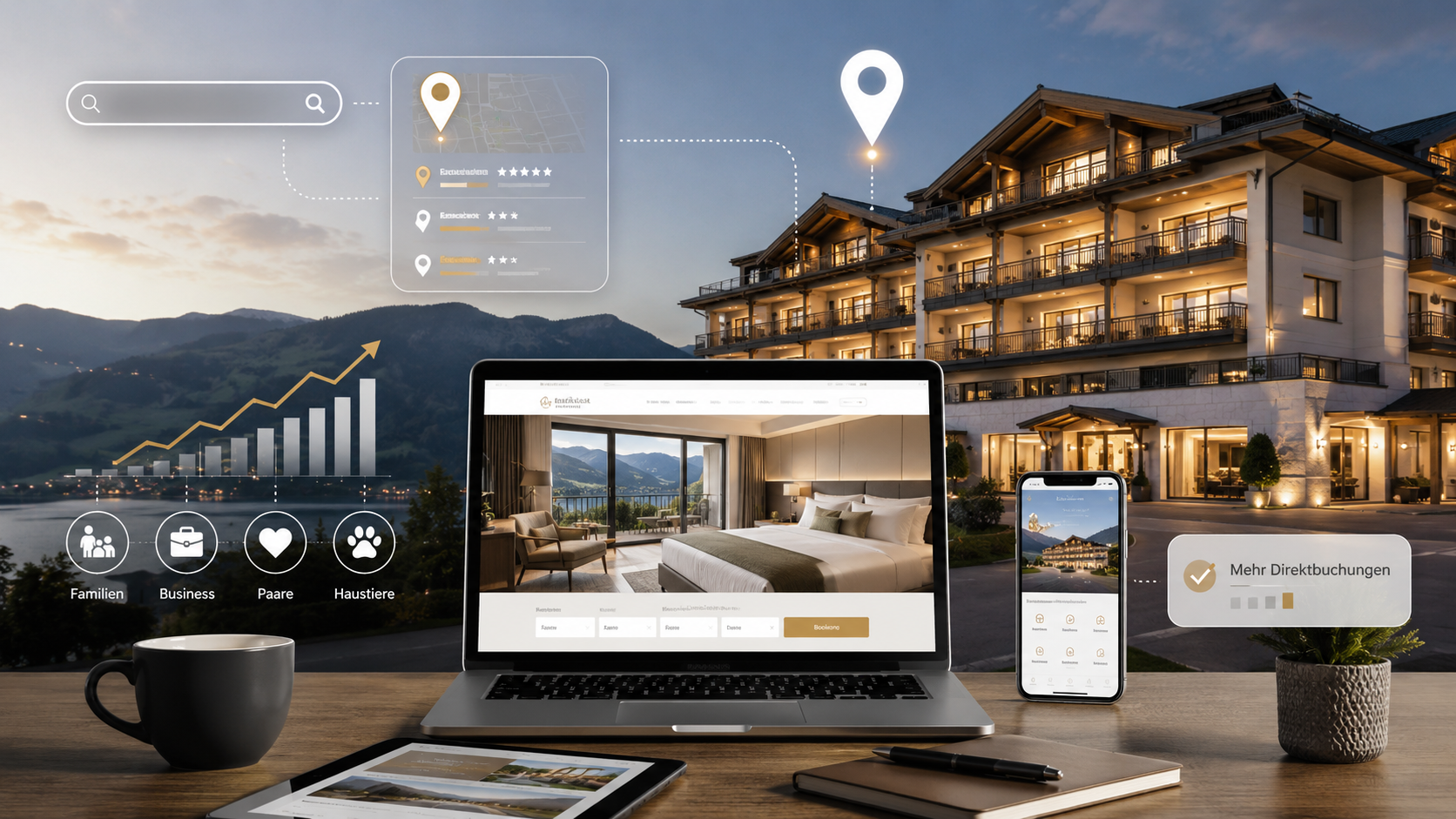
Hotel SEO · Local Search · Booking-Ready Guests
Hotel Website SEO: How to Rank for Guests Who Are Ready to Book
Hotel SEO is not about attracting random traffic. It is about appearing when the right guest is already searching for a place to stay, compare, call, inquire or book.
Your Hotel Does Not Need More Visitors. It Needs Better Search Intent.
Many hotel websites fail because they chase broad keywords and ignore the searches that actually bring revenue. A guest searching “hotel website SEO” is researching. A guest searching “family hotel near Dresden with parking” is much closer to making a decision.
For hotel owners and managers, this distinction matters. SEO should not only increase impressions. It should help your property appear in the moments when guests are comparing options, checking location, looking for specific amenities or planning a stay around an event, business trip or weekend break.
A strong hotel SEO strategy connects search visibility with commercial intent. That means your website structure, content, technical setup and local signals must all help search engines understand why your property is the right result for a specific guest need.
The Hotel SEO Keywords That Actually Matter
The best hotel keywords are not always the highest-volume terms. They are the terms that reveal what the guest wants now.
Location intent
Searches like “hotel near city center,” “guesthouse near train station” or “hotel near event venue.”
Amenity intent
Searches around parking, breakfast, pets, wellness, family rooms, accessibility or business facilities.
Trip purpose intent
Business stay, weekend trip, hiking holiday, family visit, trade fair, wedding guests or long-stay accommodation.
Decision intent
Searches with “best,” “with,” “near,” “available,” “open,” “price,” “rooms” or specific local modifiers.
Build Pages Around Guest Questions, Not Around Your Internal Menu
A homepage cannot rank for every important search. If your hotel serves different guest types, locations, amenities or stay purposes, your website needs dedicated pages that match those searches.
1. Location pages
Create useful pages for important nearby areas, attractions, transport points, business districts or event venues. These pages should not be thin keyword pages. They should explain distance, travel options, parking, local context and why your hotel is a practical choice.
2. Amenity pages
If guests often ask about parking, breakfast, pet-friendly stays, family rooms or accessibility, these topics deserve clear sections or dedicated pages. Search engines and AI assistants need explicit answers, not hidden details.
3. Guest-type pages
Business travelers, families, couples, hikers and long-stay guests all make decisions differently. A focused page can explain the benefits that matter to each group and guide them toward the right next step.
The SEO Mistake That Costs Hotels Money
Many hotel websites have beautiful images but weak information architecture. Search engines see a few generic pages. Guests see missing answers. AI search tools cannot confidently explain the property.
The result is expensive: your hotel may be a good match for the guest, but your website does not prove it clearly enough. Better SEO turns your real strengths into structured, searchable and decision-ready content.
Request an SEO website reviewLocal SEO for Hotels: Be Visible Where Guests Compare
Hotel searches are often local and mobile. Guests may compare properties near a venue, near a city center, near a highway exit or near a business appointment. Your website and your Google Business Profile should support the same message.
Make sure your hotel name, address, phone number, opening or reception details, photos, categories and important amenities are consistent. Your website should reinforce these signals with clear location content, embedded maps, travel instructions and nearby points of interest.
Olymaris also covers this broader local search behavior in the article Why “Near Me” Searches Turn Into Local Customers , which is especially relevant for hotels that depend on regional and mobile search demand.
Technical SEO Signals Hotels Should Not Ignore
Hotel SEO is not only content. Technical quality decides whether your pages can be crawled, understood and trusted.
- • Fast mobile loading for image-heavy room and location pages.
- • Clean title tags and meta descriptions for each important page.
- • Structured internal links between rooms, offers, location pages and FAQs.
- • Schema markup for hotel details, local business data, FAQs and breadcrumbs.
- • Indexable pages without accidental noindex tags or blocked resources.
- • Redirect planning before any hotel website relaunch.
If you are planning a redesign or migration, read the technical SEO checklist before relaunch before changing URLs, templates or content.
Hotel SEO for AI Search and Chatbots
Guests increasingly ask AI tools for recommendations, comparisons and travel planning help. Your website should make it easy for search engines and AI systems to understand your property accurately.
Write clear answers to common questions: Where is the hotel located? Who is it best for? Is parking available? Are pets allowed? Is breakfast included? What makes the property different? Which nearby places are relevant?
Avoid vague marketing language. Specific, structured and helpful content is easier to quote, summarize and recommend. For hotel owners, this means AI visibility starts with the same thing guests appreciate: clear answers.
How to Measure Whether Hotel SEO Is Working
Rankings are useful, but they are not the full picture. A hotel should measure SEO by business outcomes.
Visibility
Which pages appear for location, amenity and guest-intent searches?
Engagement
Do visitors stay, read key pages and move toward contact or booking actions?
Leads
Are organic visitors generating calls, inquiries, booking clicks or qualified contact requests?
For the broader hotel website strategy, including direct booking, features and costs, read the main guide: Hotel Website with Direct Booking: Features, Channel Manager and Costs .
FAQ: Hotel Website SEO
How long does hotel SEO take?
Some improvements, such as better titles, internal links and local content, can help quickly. Strong organic growth usually takes consistent work over several months.
Should every hotel create location pages?
Only when the pages are genuinely useful. A strong location page should help guests understand distance, transport, nearby attractions and why your hotel fits that search.
Is SEO still useful if a hotel uses booking portals?
Yes. SEO helps your own website capture branded, local and high-intent searches, so guests can evaluate your property directly instead of relying only on third-party listings.
Comments
1 published comments
Markus
Sehr hilfreicher Artikel. Besonders der Punkt, dass Hotel-SEO nicht nur aus allgemeinen Begriffen wie „schöne Zimmer“ besteht, sondern aus konkreten Informationen zu Zielgruppen, Lage, Ausstattung und häufigen Fragen, ist wichtig. Viele kleinere Hotels unterschätzen genau das. Eine klare Struktur mit Zimmerseiten, Standortinformationen und FAQ kann Gästen die Entscheidung deutlich leichter machen.
Admin reply
Vielen Dank, Markus. Genau das ist der entscheidende Punkt: Gute Hotel-SEO beginnt nicht bei einzelnen Keywords, sondern bei der Frage, welche Informationen Gäste wirklich brauchen, bevor sie buchen. Wenn Struktur, lokale Relevanz und hilfreiche Inhalte zusammenkommen, wird eine Hotel-Website nicht nur besser gefunden, sondern wirkt auch deutlich vertrauenswürdiger.
Recommended Articles
Fresh insights from our blog

AI Automation for Small Businesses: What Is Actually Worth It?
Not every AI idea is worth the effort. This guide shows small businesses which workflows are worth automating first, how to judge readiness,...

CRM for Small Businesses: A Practical Guide to Starting Simple
A practical guide for owners and managers who want a simple CRM without turning sales into a software project. Learn when a CRM is worth it,...

Turn Your Website Into a Sales Machine: More Leads and Revenue
A practical guide for small businesses that want their website to do more than look good. Learn how clearer messaging, stronger trust, bette...

Medical Practice Website: Booking, Forms, Costs
A practical guide to building a medical practice website that helps patients book online, submit forms, and understand what affects cost.

Driver Tracking for Small Transport Companies: Features and Costs
A practical guide to driver tracking for small transport companies: what it does, what to look for, and how to think about cost and rollout.

Holiday Apartment Website with Booking System: What Owners Really Need
A practical guide for holiday apartment and serviced apartment owners who want a booking website that shows availability, builds trust and t...