

Trust Elements on Company Websites

Trust elements help visitors feel safe enough to take the next step. This guide shows small businesses which signals matter most, where to place them, and how they support more enquiries without sounding pushy.
Olymaris Team
Published on July 16, 2026
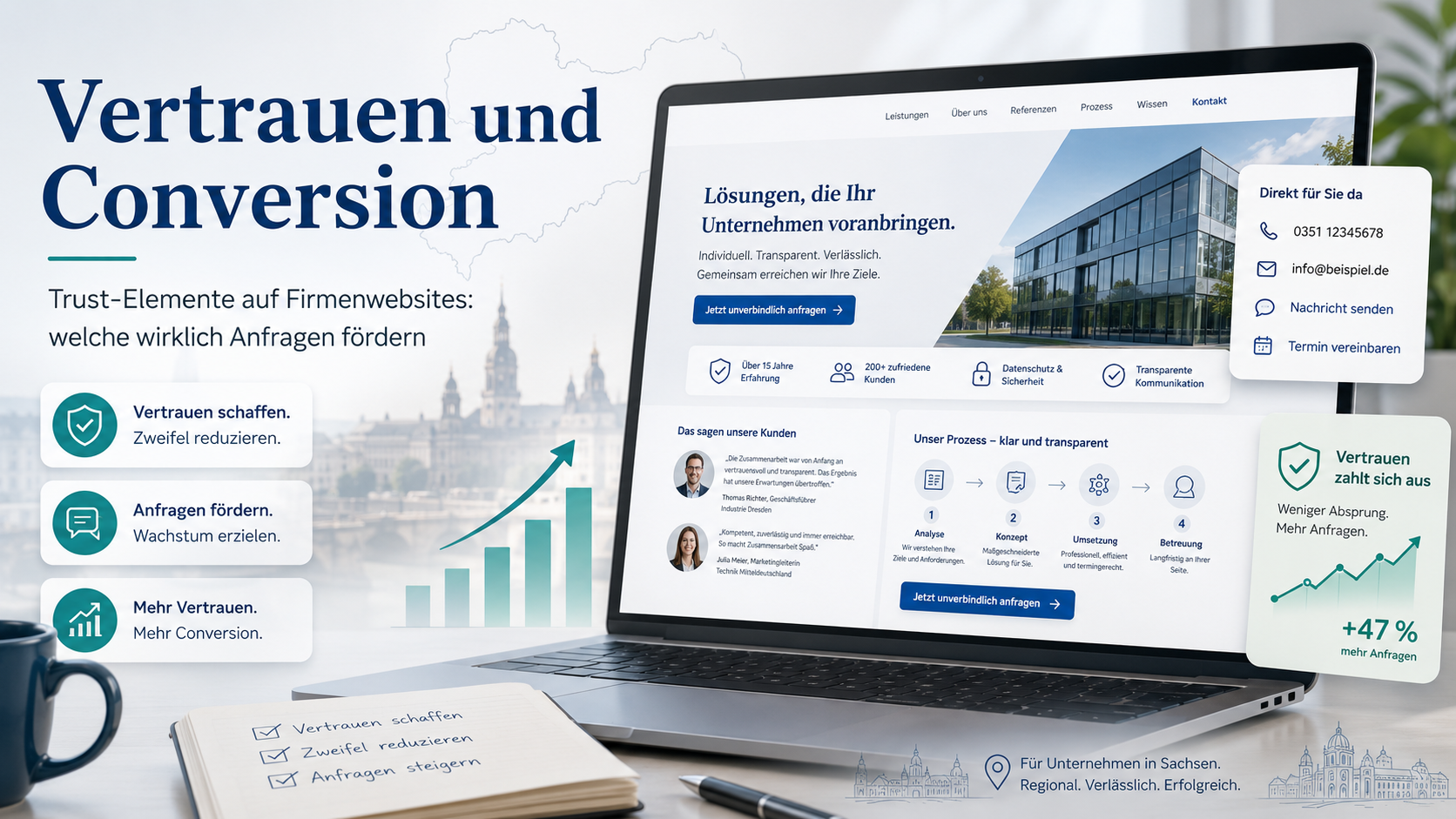
Trust elements on company websites: what actually helps people enquire?
Many business websites explain services clearly enough, but still fall short at the moment that matters most: asking a visitor to take action. In many cases, the missing piece is not more traffic or more design polish. It is trust. Before someone fills in a form, books a call, or requests a quote, they want signs that your company is credible, clear, and safe to contact.
This article focuses on one practical question: which trust elements belong on a company website if you want it to support enquiries? If you want the broader strategy behind a conversion-focused website, see Turn Your Website Into a Sales Machine: More Leads and Revenue.
Short answer
The most useful trust elements are the ones that reduce hesitation at the exact point where a buyer is deciding whether to contact you. That usually includes clear positioning, visible contact details, references or proof of work, a simple explanation of your process, realistic claims, and a low-friction next step.
Why trust matters before conversion
Small companies often assume trust is something people decide after the first call. In reality, visitors start judging credibility within seconds. If your website feels vague, thin, or hard to verify, people may leave even if your service is a good fit.
Trust elements do not replace a strong offer. They support it. They help a visitor answer practical questions such as: Is this company real? Do they understand businesses like mine? What happens if I get in touch? Will this waste my time?
Without trust
Visitors compare, hesitate, and postpone action.
With trust
Visitors understand your value faster and feel more confident taking the next step.
The trust elements that matter most
1. Clear positioning
People trust websites that quickly explain who the service is for, what problem it solves, and why the offer is relevant.
2. Real contact paths
A visible contact page, clear form, and obvious next step make your business feel reachable and legitimate.
3. References and proof
Examples of work, client types, or practical proof points help visitors see that your service is not just a claim.
4. Process clarity
When buyers understand what happens after they enquire, uncertainty drops and response rates often improve.
5. Consistent messaging
If your homepage, service page, and CTA all say different things, trust weakens. Consistency makes your business feel more reliable.
6. Honest claims
Overpromising creates doubt. Specific, realistic wording usually builds more confidence than hype.
Where to place trust elements on the page
- Near the top of the page: reinforce your positioning and show that the business is real and relevant.
- Before major CTAs: add proof, process clarity, or reassurance before asking for action.
- On service pages: connect trust directly to the offer, not only to the homepage.
- Around forms: reduce friction with clear expectations and a simple contact path. For more on this step, read How to Optimize CTAs and Contact Forms for More Enquiries.
If your website copy is unclear, even strong proof can underperform. That is why trust and messaging should work together. See Website Copy That Sells for the messaging side of the same problem.
Common mistakes that weaken trust
- Generic claims with no supporting detail
- Contact forms that ask too much too early
- Service pages that describe features but not business outcomes
- Important proof hidden far below the CTA
- A polished design that still feels vague about what happens next
If your site looks professional but still underperforms, the issue may go beyond trust alone. In that case, Why Isn’t My Website Generating Enquiries? can help you diagnose the bigger conversion picture.
How this fits a sales-focused website
Trust elements are one part of a stronger sales path. They work best when combined with sharper positioning, clearer CTAs, better lead forms, and a simpler page structure. That is the wider goal behind Website Sales Machine: turning an existing website into a clearer route from interest to enquiry.
For service businesses, trust should not feel decorative. It should actively help a buyer make a decision.
Next step
If your website explains what you do but still does not create enough confidence to generate enquiries, the problem may be in the trust layer of the sales journey.
Comments
0 published comments
No approved comments have been published yet.
Recommended Articles
Fresh insights from our blog

AI Automation for Small Businesses: What Is Actually Worth It?
Not every AI idea is worth the effort. This guide shows small businesses which workflows are worth automating first, how to judge readiness,...

CRM for Small Businesses: A Practical Guide to Starting Simple
A practical guide for owners and managers who want a simple CRM without turning sales into a software project. Learn when a CRM is worth it,...

Turn Your Website Into a Sales Machine: More Leads and Revenue
A practical guide for small businesses that want their website to do more than look good. Learn how clearer messaging, stronger trust, bette...

Medical Practice Website: Booking, Forms, Costs
A practical guide to building a medical practice website that helps patients book online, submit forms, and understand what affects cost.

Driver Tracking for Small Transport Companies: Features and Costs
A practical guide to driver tracking for small transport companies: what it does, what to look for, and how to think about cost and rollout.

Holiday Apartment Website with Booking System: What Owners Really Need
A practical guide for holiday apartment and serviced apartment owners who want a booking website that shows availability, builds trust and t...