

SEO for High-Intent Visitors

Traffic alone does not grow a business. This guide shows how small companies can use SEO to attract visitors who are already comparing options, looking for a provider, and more likely to enquire.
Olymaris Team
Published on July 17, 2026
SEO for High-Intent Visitors
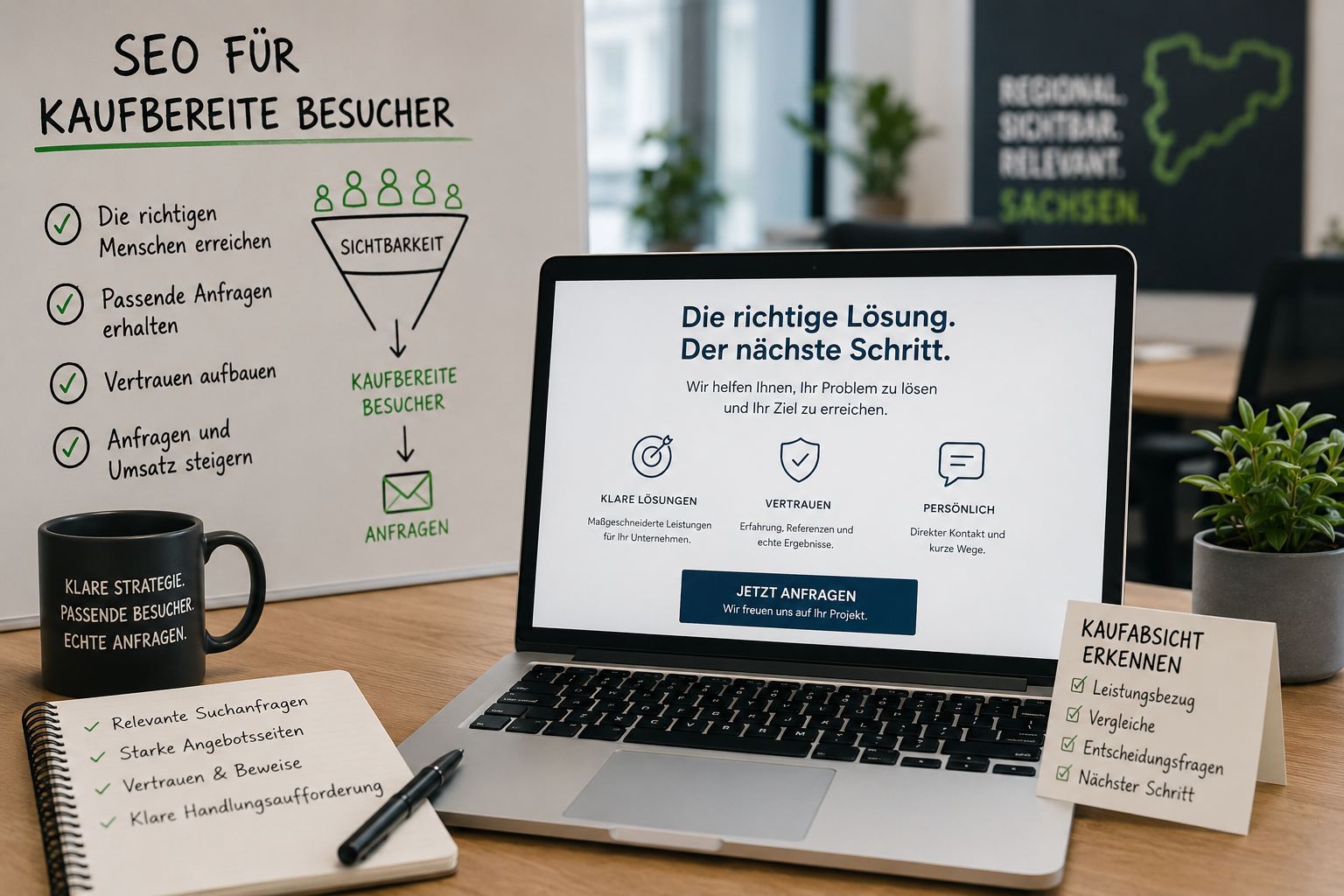
Not every website visitor is equally valuable. Some people are only researching. Others are already comparing providers, checking trust signals, and deciding who to contact. SEO for high-intent visitors focuses on the second group. For small companies, that usually means fewer wasted clicks, better-fit enquiries, and a website that supports sales instead of just collecting traffic.
If you want the broader picture of how messaging, trust, CTAs, and SEO work together, start with this main guide on turning your website into a sales machine. This article focuses on one narrower question: how to attract visitors who are closer to action.
What is a high-intent visitor?
A high-intent visitor is someone whose search suggests a real business need, not just general curiosity. They may be looking for a service, comparing options, or trying to solve a problem soon. In practice, these searches are often more specific and more commercial than broad awareness keywords.
Lower intent
Broad searches, early research, general learning, and visitors who may not be ready to contact anyone yet.
Higher intent
Specific searches, service-focused needs, comparison behaviour, and visitors who want clarity before making an enquiry.
That does not mean broad SEO has no value. It means that for many service businesses, SEO focused on buying intent is often the faster route to qualified leads.
Why this matters for small businesses
Small teams usually do not need maximum traffic. They need the right traffic. A website can rank for informational topics and still produce very little business value if visitors are not ready to act. High-intent SEO helps you focus limited time and budget on pages that support real decisions.
- It brings in visitors who are more likely to enquire.
- It supports clearer service pages and landing pages.
- It improves the fit between search, page message, and CTA.
- It makes your website more useful as a sales tool, not just a marketing asset.
How to spot high-intent SEO opportunities
1. Look for service-led searches
Searches that clearly relate to a service, provider, or business problem are often stronger than broad educational terms.
2. Prioritize decision-stage questions
People close to action often search for what to expect, what matters, or how to choose the right option.
3. Match the page to the search
If the search is commercial, the page should help someone evaluate and move forward, not just explain theory.
4. Remove conversion friction
Even strong SEO underperforms if the page is vague, slow, or hard to act on.
What these visitors need to see on the page
High-intent SEO is not only about keywords. It also depends on what happens after the click. Visitors who are ready to buy usually want fast answers to practical questions: What do you offer? Who is it for? Why should they trust you? What happens next?
- A clear offer and positioning statement near the top of the page.
- Simple language that explains business value, not just features.
- Trust elements that reduce hesitation.
- A visible next step with a clear CTA.
If your message is weak, read Website Copy That Sells. If the final step is the problem, see how to optimize CTAs and contact forms for more enquiries. If trust is missing, this guide to trust elements on company websites is the next useful read.
A practical way to think about SEO in a sales-focused website
For many businesses, the goal is not to publish endless content. It is to build a small set of pages that attract the right searches and help visitors move toward contact. That often includes service pages, focused landing pages, and supporting articles that answer decision-stage questions.
This is also where a Website Sales Machine approach becomes useful. SEO works better when it is connected to sharper positioning, stronger landing page structure, trust signals, and clearer contact paths. If your website gets visits but still feels like a brochure, the issue may be the full sales journey rather than rankings alone.
And if you are still unsure whether the problem is traffic or conversion, Why Isn’t My Website Generating Enquiries? helps diagnose the difference.
Common mistake: chasing volume instead of intent
A common SEO mistake is choosing topics only because they seem popular. High search volume can look attractive, but it does not automatically mean business value. For a small business, a lower-volume search with stronger buying intent can be far more useful than a broad topic that brings the wrong audience.
The better question is not “How do we get more traffic?” but “Which searches bring people who are likely to become real opportunities?”
Next step
If you want SEO to support enquiries, treat it as part of the whole website sales path. The search term, the page message, the trust signals, and the CTA all need to work together. That is how SEO becomes more than visibility and starts contributing to revenue.
Want a website that attracts better-fit enquiries?
If you want to improve SEO for high-intent visitors and connect it to a clearer sales journey, explore the service or get in touch for the next step.
Comments
0 published comments
No approved comments have been published yet.
Recommended Articles
Fresh insights from our blog

AI Automation for Small Businesses: What Is Actually Worth It?
Not every AI idea is worth the effort. This guide shows small businesses which workflows are worth automating first, how to judge readiness,...

CRM for Small Businesses: A Practical Guide to Starting Simple
A practical guide for owners and managers who want a simple CRM without turning sales into a software project. Learn when a CRM is worth it,...

Turn Your Website Into a Sales Machine: More Leads and Revenue
A practical guide for small businesses that want their website to do more than look good. Learn how clearer messaging, stronger trust, bette...

Medical Practice Website: Booking, Forms, Costs
A practical guide to building a medical practice website that helps patients book online, submit forms, and understand what affects cost.

Driver Tracking for Small Transport Companies: Features and Costs
A practical guide to driver tracking for small transport companies: what it does, what to look for, and how to think about cost and rollout.

Holiday Apartment Website with Booking System: What Owners Really Need
A practical guide for holiday apartment and serviced apartment owners who want a booking website that shows availability, builds trust and t...