


Website for Cooking Classes That Sells Seats

A practical guide for cooking schools and workshop hosts who want a website that turns interest into bookings, payments, and smoother event management.
Olymaris Team
Published on May 30, 2026
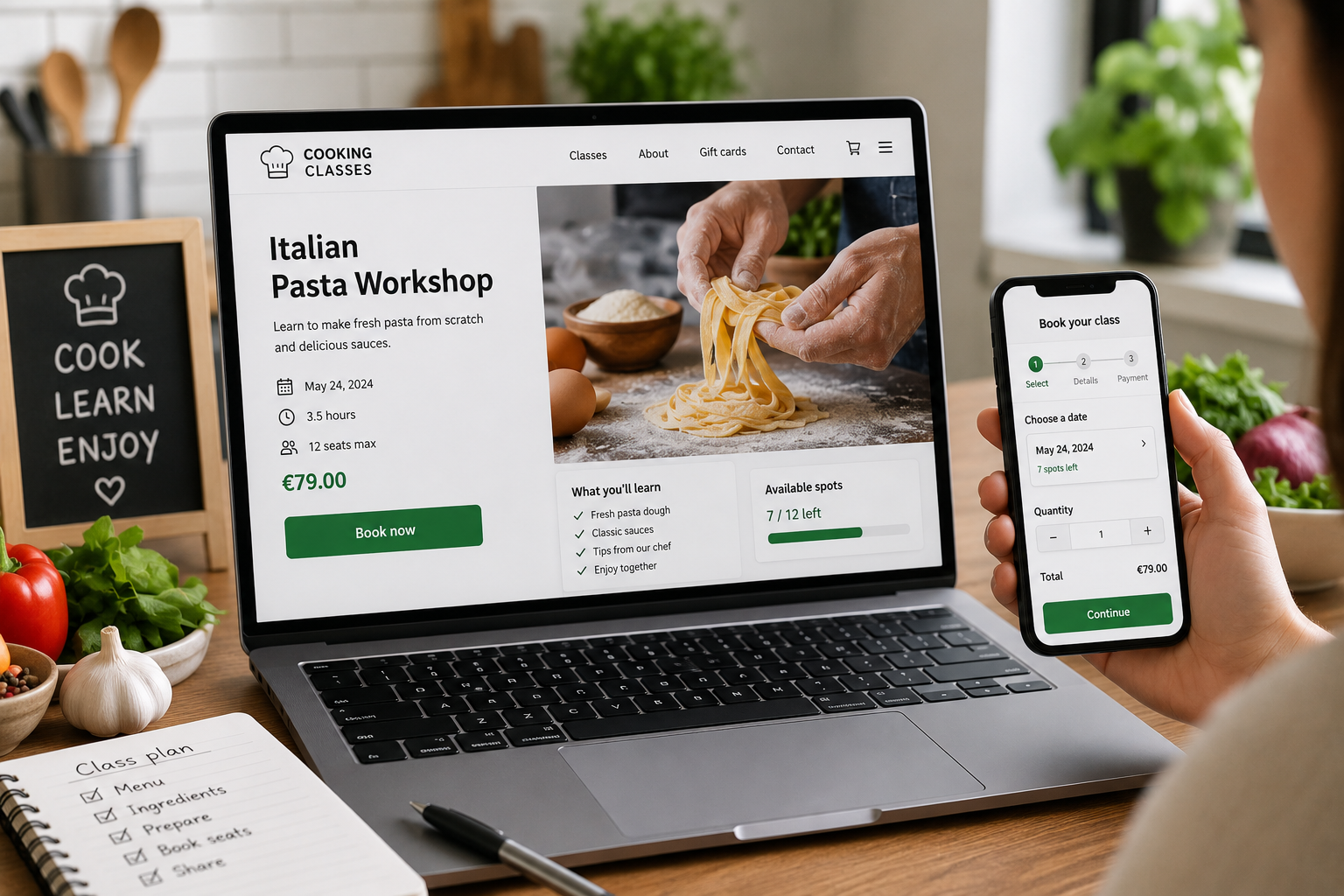
Website for cooking classes that helps people book, pay, and show up
If you run cooking classes, your website should do more than describe the menu. It should help people choose a date, reserve a seat, pay online, and receive a clear confirmation without extra back-and-forth. That is especially useful for small teams that want fewer manual steps and a more professional customer experience.
A good setup turns your class page into a simple sales flow. Visitors can see what the class includes, how many seats are left, and what happens next. For the business, that means fewer missed inquiries, less admin work, and a clearer view of demand.
What the website needs to do well
For cooking classes, the most important job is not design alone. It is reducing friction. People often decide quickly, so the page should answer the practical questions first: What will I learn? When is the class? How many seats are available? How do I pay?
Clear class details
Show the topic, date, duration, and what participants should bring.
Online booking
Let visitors reserve a seat without sending a separate message first.
Simple payment flow
Make payment part of the booking step so the sale is completed faster.
Automatic confirmation
Send a clear email after booking so participants know they are registered.
Capacity control
Keep the class from overbooking and make seat limits visible to the team.
Check-in support
Use digital tickets or QR check-in to make arrival smoother on the day.
Why this matters for small businesses
A cooking class often sells through trust and timing. If the booking process feels slow, people move on. If the page is clear and the payment step is easy, the business can capture interest while it is still fresh. That is why a website with an online ticket shop is more than a nice extra: it is a practical sales tool.
This approach also helps managers and owners plan better. Instead of guessing how many people might come, they can see bookings in one place and react earlier if a class needs promotion or a second date.
A better fit than manual booking handling
Many cooking schools still rely on email threads, phone calls, or message apps. That can work at first, but it becomes harder to manage as soon as classes fill up or multiple dates are offered. A dedicated booking website keeps the process consistent and easier to scale.
For the customer
They can book when they are ready and get immediate clarity.
For the business
You spend less time chasing confirmations and more time running the class.
Related planning topics
If you are deciding how the booking flow should work, it helps to look at payment handling and attendee management as part of the same system. A useful next read is the main guide on why event websites need to sell. For implementation details, you may also want to review Stripe payments for event ticket sales and the admin panel for bookings and attendees.
What to ask before you start
- How many classes do you want to sell online each month?
- Do you need seat limits, waiting lists, or multiple dates?
- Should participants receive digital tickets and email confirmations?
- Who will manage bookings and check-ins after launch?
Next step for your cooking class website
If you want a website that supports bookings instead of just presenting information, the next step is to define the class flow, payment setup, and admin process. That gives you a clearer path to a site that helps people book with confidence.
Comments
0 published comments
No approved comments have been published yet.
Recommended Articles
Fresh insights from our blog

AI Automation for Small Businesses: What Is Actually Worth It?
Not every AI idea is worth the effort. This guide shows small businesses which workflows are worth automating first, how to judge readiness,...

CRM for Small Businesses: A Practical Guide to Starting Simple
A practical guide for owners and managers who want a simple CRM without turning sales into a software project. Learn when a CRM is worth it,...

Turn Your Website Into a Sales Machine: More Leads and Revenue
A practical guide for small businesses that want their website to do more than look good. Learn how clearer messaging, stronger trust, bette...

Medical Practice Website: Booking, Forms, Costs
A practical guide to building a medical practice website that helps patients book online, submit forms, and understand what affects cost.

Driver Tracking for Small Transport Companies: Features and Costs
A practical guide to driver tracking for small transport companies: what it does, what to look for, and how to think about cost and rollout.

Holiday Apartment Website with Booking System: What Owners Really Need
A practical guide for holiday apartment and serviced apartment owners who want a booking website that shows availability, builds trust and t...